

The OpenClaw phenom, the AI | crypto fusion boom meets gov regu
 RE:
RE: RE ALL:
 FWD:
FWD:
44 days since FTC warning — No response from Tim Cook and no real change at Apple News…
The OpenClaw phenom: Open-source agents just went from meme to market-moverSilicon Valley’s latest obsession isn’t another closed-source chatbot. It’s OpenClaw—the self-hosted, autonomous AI agent that actually executes. Launched in late 2025 by Austrian builder Peter Steinberger (ex-PSPDFKit founder who cashed out and grew restless), OpenClaw became the fastest-growing open-source AI project in GitHub history, surpassing 200k stars in weeks. Crypto Twitter went wild: users deployed agents for token trading, airdrop farming, DAO management, and even self-funding via on-chain fees. One developer’s agent reportedly earned $2k+ and began “lobbying” its owner to clone itself.
The killer feature: OpenClaw runs locally on your Mac or Linux machine. Connect it to WhatsApp, Telegram, Discord, Slack—whatever you use. It clears your inbox, books flights, runs terminal commands, browses the web, manages calendars, and maintains persistent memory across sessions. Bring your own LLM (Claude, GPT, or local models). Your data never leaves your hardware. Mr. Steinberger built the prototype in one hour. He’s the rare founder who ships harder than most VC-backed teams: in January alone, he pushed 6,600+ commits, largely by turning AI agents into his personal dev squad—more output than most startups manage in a quarter. We love it! First-gen, fully open, not another walled garden. This is the clearest signal yet that the AI/crypto fusion thesis is accelerating—from passive chat to executable, on-chain action.
“OpenClaw is definitely the next ChatGPT—the foundational ‘OS’ layer for the new paradigm of AI agents. In one line of code, you can create your own agent. Then after that, ask the agent to do whatever you want.” —Nvidia CEO Jensen Huang on CNBC, March 17, 2026 By February 2026, Steinberger joined OpenAI 🙄 to lead their frontier of personal agents. OpenClaw also spun out into an independent foundation with OpenAI sponsorship, keeping it fully open source and community-driven. How OpenClaw is reshaping the industry🤖 Agentic AI Goes Permissionless 🤖 Local and Decentralized Compute Demand Explodes 🤖 Crypto Gains Its First Real Autonomous Participants 🤖 Security and Verifiability Become Table Stakes 🤖 Self-Sustaining Agent Economies Emerge Coinbase founder Brian Armstrong’s vision of “more agents than humans making payments” just moved from theory toward reality. Our Take: Permissionless velocity beats polished incumbents every timeOpenClaw didn’t come from a $100B lab or an a16z deck. One Austrian founder, a one-hour prototype, and raw open-source momentum turned a side project into GitHub’s fastest explosion—proving the market was starving for agents that execute, not just converse. This is AI/crypto fusion in motion: self-hosted runtimes meeting on-chain rails, spawning real economic actors faster than regulators or incumbents can contain. The centralization paradox persists—patchwork rules could limit upside—but decentralized architecture plus crypto incentives remain the most reliable path to truly permissionless, scalable agents. For founders: Skip the next wrapper. Build the missing primitives—cryptographic sandboxes, agent-to-agent marketplaces, verifiable compute layers, or non-human payment rails that let millions of OpenClaw-style agents move value safely and sustainably. For VCs: The next billion-dollar outcome won’t be another frontier model. It will be the pick-and-shovel infrastructure enabling this agent economy to transact real capital on-chain without exploding custody, compliance, or compute costs. Long-term verdict: OpenClaw has staying power. The independent foundation plus OpenAI sponsorship creates the ideal hybrid—community velocity with enterprise gravitas and resources. It could evolve into the Linux of agents: sticky, ubiquitous, and the default runtime for everything from solo power users to multi-agent fleets. Security and regulatory risks are real, but open-protocol momentum is stronger. The claw is open—and it’s only getting sharper. 🦞
Welcome to the AI | Crypto Fusion (DeAI) BoomThe other new Silicon Valley innovation sensation is the fusion of blockchain incentives and artificial intelligence—fashionably called DeAI. A whole new generation of VC-backed companies is building decentralized marketplaces, on-chain AI agents, sovereign data layers, and token-rewarded networks, putting power (and privacy) back in the hands of creators. These companies embrace the original crypto ethos—permissionless innovation, verifiable trust, and resistance to centralized control—but supercharged for the AI age. As of early 2026, we’ve counted 140 decentralized AI startups in Silicon Valley proper alone. In 2025, 83 DeAI companies raised $565M in VC funding. While still a fraction of the pure-AI total (~$23B in 2025), it’s the fastest-growing narrative in crypto. Four main flavors of fusion play
Six DeAI fusion companies to watch
Become a paid member and unlock the full list of the top DeAI companies & the expanded VC list that are betting on DeFi. 💥 Subscribe now at 33% off—just $6/month (medium designer coffee ☕️)—and power Cryptonite! 🚀
The Crypto native VCs funding the fusionInteresting, the DeFi money is coming almost exclusively from the original crypto‑native VC heavyweights who have hung in through highly volatile markets. Their narrative: blockchain as the natural antidote to AI centralization.
These funds aren’t chasing memes—they’re betting that crypto incentives + decentralized architecture will prevent AI from becoming another Big Tech monopoly. Become a paid member and see the full list of the top DeAI companies & VCs on the planet below.
What’s at stake: State vs. FederalAll the excitement in the DeAI game leads us to the political and regulatory winds that could either turbocharge or throttle the AI sector. The Innovation‑first, America‑first campLast week, the Trump Administration released its National Policy Framework for Artificial Intelligence: Legislative Recommendations. The core message: Congress should enact a single, minimally burdensome national standard for AI—and preempt the emerging patchwork of conflicting state laws that risks slowing U.S. innovation and ceding ground to China.
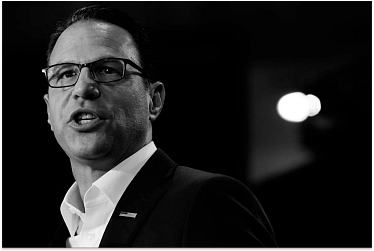
The State‑as‑lab campDemocrats largely oppose broad federal preemption that would erase state AI initiatives. They’re pushing for stronger federal accountability measures alongside preserved state flexibility—see bills like the GUARDRAILS Act aimed at countering the Administration’s approach. For example, California Governor Gavin Newsom has advanced one of the nation’s most prominent AI-safety efforts, including SB 53 (the Transparency in Frontier Artificial Intelligence Act), which imposes transparency, safety framework, and incident-reporting requirements on developers of large frontier models. Pennsylvania Governor Josh Shapiro, meanwhile, has demonstrated practical leadership with a first-in-the-nation generative AI pilot program across state agencies—showing productivity gains and positioning Pennsylvania as a model for responsible government adoption of the technology. Both governors argue that states should retain room to experiment and legislate on local risks rather than defer entirely to a federal framework. (Both are also viewed as potential 2028 presidential contenders.)
Our Take— Federal preemption + decentralization imperativeCrypto culture instinctively rejects top-down control, so Congress preempting state AI laws can feel like the ultimate centralization power grab. Yet the flaw in “state-as-lab” experiments is clear: innovation suffers when entrepreneurs and small teams must navigate 50 conflicting rulebooks, letting incumbents with vast legal and lobbying resources dominate.
The strongest AI “regulation” is what the crypto-AI fusion already delivers: permissionless, verifiable, and impossible to gatekeep. True long-term safeguards go beyond any thin federal overlay—they lie in aggressive open-sourcing, cryptographic verification, and decentralized compute and data layers, exactly what the DeAI projects and their VC backers in this post are building. Cryptonite supports light-touch federal uniformity paired with radical decentralization, protecting space for open, on-chain, community-controlled infrastructure—so DeAI innovation can flourish and remain accessible to everyone. Stay sovereign. Stay decentralized. Build fast. —Anthony Perkins, founder & editor, Cryptonite, Medellín, Colombia —Talk to me @HeyTPerk or TheEditor@CryptoniteVentures.com
Did you know?💡
Following the Money 🤑📈 SpaceX aims to file for IPO as soon as this week | potential raise up to ~$50B–$75B |Target valuation range ~$1.75T / confidential filing expected this week or next | Space exploration, rockets, satellites, and related infrastructure | Bankers will forgo coveted ‘lead left’ position and likely list banks alphabetically | Senior banks: Bank of America, Goldman Sachs, JPMorgan Chase, Morgan Stanley, Citigroup) (March 24) 💰 Harvey raises $200M at $11B valuation | Harvey | Legal AI platform powering research, document analysis, drafting, due diligence, contract review, and agentic workflows for law firms and enterprises | VCs: GIC, Sequoia (co-leads; Sequoia triples down), Andreessen Horowitz, Coatue, Conviction Partners, Elad Gil, Evantic, Kleiner Perkins (March 25) 💰 Deccan AI raises $25M in Series A | Post-training data and evaluation work for AI models, with India-based expert workforce | VCs: A91 Partners (lead), Susquehanna International Group, Prosus Ventures (March 25) 💰 Sequen raises $16M in Series A | Real-time personalization and ranking infrastructure (TikTok-style event models and continual learning on user embeddings) for enterprise consumer companies | VCs: White Star Capital, Threshold Ventures (co-leads), Greycroft (and prior investors) (March 18) 💰 Arinna raises $4M seed round | Ultrathin, flexible solar panels using novel 2D semiconductors for spacecraft power (Sustainability/Cleantech / Space) | VCs: Spacecadet Ventures (lead), Anorak Capital, Breakthrough Energy Foundation (March 25) 💰 VITL raises $7.5M in Series A| E-prescribing marketplace/platform for cash-pay clinics, riding the GLP-1 boom (Healthcare/Biotech) | VC: SignalFire (lead) (March 25) 💰 Bluesky announces $100M Series B | (closed April 2025, disclosed March 2026) | Decentralized/open social platform for communities | VCs: Bain Capital Crypto (lead), Alumni Ventures, Anthos Capital, Bloomberg Beta, Knight Foundation, True Ventures (March 19)
VC Whispers 💸New VC funds ($30M+):💸 Kleiner Perkins – Closed $3.5B across KP22 ($1B early‑stage) and KP Select IV ($2.5B growth), with a heavy emphasis on AI platforms, infrastructure, applications, plus healthcare, autonomy, and security. (March 24, 2026) 💸 futurepresent – Closed $300M Fund I (debut fund) focused on AI platforms and infrastructure across industries, emerging from stealth via Axios’ exclusive. (March 25, 2026) 💸 Air Street Capital – Closed $232M Fund III for AI‑first companies in software, science, physical systems, and defense, Europe’s largest solo‑GP‑led VC fund to date. (March 23, 2026) 💸 Overmatch Ventures – Closed $250M oversubscribed Fund II for deep tech, defense, and space (“sovereign stack”), building on early bets such as xAI from Fund I. (March 24, 2026) 💸 Cloudberry Ventures – Launched a €50M (~$54M) debut fund targeting AI, compute/infrastructure, and deep tech in industrial and financial infrastructure. (March 23, 2026.) 💸 Montis VC – Achieved a €50M first close for its debut fund backing AI‑driven energy, industrial, and sustainability tech across early‑stage Europe. (March 19, 2026) 💸 Mundi Ventures – Closed a $100M first close for LatAm Fund I targeting fintech/insurtech, healthtech, and climate with AI‑first and deep‑tech solutions for financial‑ and health‑protection systems. (March 23, 2026) New General Partner / Venture Partner moves👳🏽♂️ Nurse Capital – Appointed Dan Weberg, PhD, MHI, RN, FAAN as General Partner, effectively stepping into a co‑founder‑style role focused on nurse‑led healthcare startups. (March 23, 2026) 👳🏽♂️ Puma Venture Capital – Welcomed Fred Moll (pioneer in robotic surgery, Intuitive Surgical co‑founder) and Scott Zinober as Partners, strengthening its medtech/robotics/healthcare‑innovation mandate. (March 23, 2026) 👳🏽♂️ Ysios Capital – Appointed Joan Perelló as Managing Partner and Arturo Urrios as Partner to lead a new early‑stage and company‑creation vertical, with a Spain‑focused biotech angle. (March 18, 2026)
The Magnificent 14🪄✨ Alphabet (GOOG): Market‑maker and index‑flow desks continue to price Alphabet as a “core AI‑cloud” holding, even after its earlier $180B‑ish 2026‑capex pivot, as trading‑desk commentary notes that AI‑related spend is now being seen as structural rather than one‑off. (March 2026) ✨Nvidia (NVDA): Goldman Sachs reaffirmed Buy with a $250 price target shortly after GTC, highlighting that data‑center AI infrastructure visibility now extends cleanly into 2027, reinforced by hyperscaler build‑out and AI‑chip order‑backlogs. (March 17, 2026) ✨ Meta (META): Meta signed multi‑billion‑dollar AI data‑center capacity agreements with major infrastructure partners and simultaneously rolled out advanced AI‑driven tools for small‑business advertisers and creators, tightening its position as a capital‑intensive AI‑cloud ad‑stack. (March 15, 2026) ✨ Apple (AAPL): iPhone sales in China surged roughly 23% over the first nine weeks of 2026, outpacing a broader smartphone‑market decline, which analysts attribute to local‑pricing incentives, AI‑related features, and stronger‑than‑expected brand loyalty. (March 19, 2026) ✨ Oracle (ORCL): Oracle’s cloud‑revenue growth remained robust through March, with several sell‑side notes highlighting its expanding role as an AI‑infrastructure and database‑layer vendor for hyperscalers and government‑sector workloads. (March 2026) ✨ Broadcom (AVGO): Broadcom launched the industry’s first end‑to‑end post‑quantum‑cryptography‑safe in‑flight network encryption solution and reported that AI‑semiconductor revenue more than doubled year‑on‑year, underpinning its role as a key AI‑chip and networking supplier. (March 19, 2026) ✨ AMD: signaled advanced preparations for its next‑gen MI400‑series AI accelerators, with industry sources indicating that designs are targeting second‑half 2026 data‑center deployments alongside hyperscaler and OEM partners. (March 2026) ✨ Salesforce (CRM): Salesforce began its largest‑ever $25B accelerated share repurchase (halving a $50B buyback program), funded partly via debt, in a move that sell‑side analysts read as strong confidence in long‑term AI‑driven CRM and SaaS growth. (March 16, 2026) ✨ ServiceNow (NOW): ServiceNow expanded its government‑focused AI‑workflow products, including AI‑driven case‑routing and workforce‑automation suites for federal and local agencies, reinforcing its “AI‑ops” narrative in the public‑sector stack. (March 2026) ✨ Intel (INTC): Multiple large‑cap tech and cloud firms are reportedly testing chips on Intel’s 18A process node, signaling that Intel’s foundry ambitions are gaining serious traction with big designers and giving trading desks a narrative around non‑TSM‑foundry AI‑supply diversification. (March 2026) ✨ Palantir (PLTR): Palantir continued to report a string of new commercial and government AI‑platform contracts, with several institutions citing its AIP‑based “AI‑ops” and mission‑automation stacks as core underwriters of its valuation multiple. (March 2026) ✨ Tesla (TSLA): The NHTSA escalated its investigation of Tesla’s Full Self‑Driving system into an engineering analysis, covering roughly 3.2M vehicles, over concerns about visibility and crash‑risk patterns, putting regulatory and brand‑risk pressure on the FSD monetization path. (March 19, 2026) Provide a little help to your friends at Cryptonite
Continue reading this post for free in the Substack app
|











Views