

The Fatima Sun Miracle: Much More Than You Wanted To Know
 RE:
RE: RE ALL:
 FWD:
FWD:
0: Here Comes The SunIn 1917, three Portuguese children reported a vision of the Virgin Mary. She promised to return to them on the 13th of each month. On the sixth month - October 13th - she would perform a great miracle. Rumors spread, and on the 13th of each month, crowds gathered to watch the children speak to an apparition that only they could see. Increasingly many of these pilgrims started reporting minor visions or miracles themselves. Anticipation for the great October miracle consumed the region, then the country. On October 13, a crowd of about 70,000 people descended on the children’s home village of Fatima. At solar noon, the children made contact with the Virgin and said the great miracle was still on track. Then someone - accounts differ as to whether it was the children or someone in the crowd itself - pointed to the sky. According to the ~150 eyewitness accounts that have come down to us, the clouds parted, and the pilgrims saw a strange pale sun (or sun-like object), painless to gaze upon. As they watched in wonder, it began to spin around and flash all the colors of the rainbow, drenching the trees and buildings and crowd with yellow, green, and purple light in sequence. Then it seemed to loom, or grow, or fall to earth - accounts differ, but everyone agrees there was mass panic, as the people expected to be crushed or burned or consumed. It lurched downward three times, as the crowd screamed in terror or confessed their sins - then returned to its usual place in the sky. The whole affair had lasted ten minutes. Since then, the Sun Miracle of Fatima has gained a reputation as the final boss of paranormal experiences, the ultimate challenge for would-be skeptics and debunkers. It’s not hard to see why. The witnesses included journalists, atheists, prominent scientists, and people who freely admitted that they had only attended in order to laugh at everyone else when nothing happened. There are far too many of them to dismiss, and their reports are surprisingly unanimous. People in nearby towns who knew nothing about the miracle claimed to have seen the same thing, seemingly ruling out mass hallucination. There are photographs - too low-tech to clearly visualize the sun, but clear enough to show a crowd pointing at the sky in astonishment. For one hundred eight years, believers and skeptics have written magazine articles, scientific papers, and about a dozen books on the topic, mostly without progress. Now its fame has reached Substack. Ethan Muse presents the case in favor, and Evan Harkness-Murphy the case against, with additional commentary from Dylan and Bentham’s Bulldog. I don’t think any of them have risen to the occasion. Ethan observes the formalities of good debate, but regurgitates such a neatly-packaged case that readers are liable to miss the thousand little threads that trail off the bottom and lead places that are, if anything, even stranger than the original miracle. Evan puts admirable effort into showing that maybe child-seers could confabulate visions, but by the time he gets to the sun miracle itself, he has only a few potshots about crowd psychology and “optical phenomena”. Other skeptics are even worse, barely gesturing at Evan’s piece before redirecting their attention to boasts about how they have totally demolished the credulous fundies, or laments about how cosmically unfair it is that they must take time out of their busy schedules to respond to such idiocy. The final boss of the paranormal deserves more respect! We will at try to at least do better than the other Substackers. But as a stretch goal, I would like to actually advance this 108-year-long conversation. This post won’t investigate the history of the child-seers or the veracity of their prophecies; we will focus entirely on the spinning sun. We’ll start by laying out the case the way Ethan and other advocates typically present it. Then we’ll go into the usual skeptical responses, finding them to be potentially promising IOUs for a plausible case, but not really the case itself. Finally, we’ll (hopefully) go beyond this well-trodden territory; while we may not reach a certain final answer, we’ll (hopefully) give some compelling circumstantial evidence for why such an answer might exist. The cost of thoroughness is length; don’t continue unless you want to be nerd-sniped by 30,000 words about the weather in Portugal 108 years ago. Finally, at many points in this discussion, you will feel tempted to stare at the sun. Do not stare at the sun. By the end of this discussion, I hope you will not only have rederived the usual reasons not to stare at the sun, but maybe even discovered some new ones you didn’t know about. 1: The TestimoniesThere’s a joke about three mathematicians who spot a black cow on a train ride through Scotland. One of them says “I see the cows in Scotland are black”. The second objects “Technically, we only know that there is one black cow in Scotland.” The third objects “Technically, we only know that there is one cow in Scotland, at least one side of which is black.” This is the level of paranoia we should deploy against claims of “over a hundred and fifty eyewitnesses”. Technically, we only know that there’s a book containing the sentence “there were over a hundred and fifty eyewitnesses”! (technically, you just know that Astral Codex Ten says there’s a book containing the sentence “there were over a hundred fifty eyewitnesses”.) To address this concern, I tried to follow as many citation trails as I could to the primary sources, seeing how many completely unimpeachable chains-of-transmission I could find. I gave up after finding sixty, with the source material far from exhausted. I believe the claim of 150 recorded witness testimonies is true. If anything, it’s an underestimate. You can find the full citation chains in the spreadsheet at the bottom of this post. In mid-October 1917 - that is, only a week after the miracle - the parish launched an investigation. Sixteen of our testimonies come from this process - conducted by a priest, related under oath, and witnessed by a clerk. A few weeks later, Church officials worried that local peasants might be too easily influenced, and started a search for educated or sophisticated witnesses; another seven testimonies come from this process. The diocese apparently didn’t trust the parish, and launched their own investigation five years later, including a call from the bishop specifically asking for people who had seen something different from the parish investigation’s story or even nothing at all; six reports are testimonies to this Canonical Commission (there are far more in Portugese documents I can’t access, and some of the secondary sources draw from this stock). The caretakers of the Fatima shrine gathered documents from all three of these investigations - parish, auxillary parish, and diocesan - into a six-volume Portuguese collection called the Documentação Crítica de Fátima (DCF). Of these, they made a 633 page selection available for free download as a PDF, which I was able to machine translate into English. Enough of these documents match other publicly available sources that the shrine caretakers would have to have perpetrated an implausibly complicated fraud to have made them up. Several Portuguese newspapers published articles about the event. The most thorough coverage was in O Seculo; there is a grainy mostly-unreadable scan of the original October 15th article here, and a high-quality version of an October 29th magazine-style reprint here. An eyewitness account was also published in A Ordem; you can find a scan of the original here. An editorial in Correio da Beira is not available as an original scan, but was reprinted in DCF. In the 1950s, an American Catholic named John Haffert became obsessed with cataloguing Fatima witnesses before they died off; he says he interviewed two hundred of them, of whom twenty-seven make it into his book Meet The Witnesses. Most of Haffert’s subjects are attested in other sources; in one case, that of American witness Dominic Reis, the interview was recorded and is available on YouTube. These are too numerous for it to be worth quoting each of them in full; we’ll have to pick and choose. I’ll start by quoting the classic ones that most successfully establish the consensus story, then move on to the rare outliers that say it happened differently or not at all. Finally, I’ll discuss the accounts from surrounding areas, which are usually used to establish that the miracle could not have been simple power of suggestion. 1.1: The Classic TestimoniesHere are the most famous accounts, cited by almost all Catholic sources and most of the skeptical ones. To set the scene - it’s been raining all day, the crowd is wet and restless, and it’s a few minutes after the predicted time of the miracle. Then: Avelino de Almedia¹, correspondent for the anti-Catholic newspaper O Seculo:
Jose Garrett, lawyer:
Manuel Perreiro da Silva, local priest:
Maria Jose de Leimos Quieros, editorial writer:
Goncalo de Almedia Garrett, mathematician:
Jacinto de Almedia Lopes, local resident:
1.2 Negative TestimoniesA natural next question is whether these were a handful of cherry-picked susceptible individuals, or whether everyone present saw the same thing. Of the 60 statements I was able to conclusively establish as real, plus a few dozen more I came across but couldn’t conclusively establish, 2 were explicitly negative, and other ~3 were sort of vague but suggested some people might not have seen it. The two clearly negative statements are: Izabel Brandao de Mela:
Leonor das Dores Salema Manoel:
We’ll later come across an extremely surprising coda to Manoel’s negative report. For now, we move on to the ambiguously-kind-of-negative statements. Jose Joaquim da Silva (interview with John Haffert):
This person only says they “thought there was something extraordinary”. The interviewer, John Haffert, a believer, describes the interview as “Jose da Silva did not see the sun fall from the sky, as is evident from the fact that he was not afraid…in the rather thorough investigations made for this book, he was one of only two persons we found who thought they had not seen the miracle”. Although the quoted section itself is ambiguous, I will accept Mr. Haffert’s opinion that this counts as a negative. Maria Jose de Lemos Quiera:
Although Quiera herself saw the miracle, she says her coachman didn’t (because he was feeding the horses). Although she plays this for laughs, other witnesses say that the whole world was changing colors and the sun was falling to earth and people were screaming that they were about to die. How hard was he concentrating on these horses?! Leonor de Avelar e Silva Constancio:
Ms. Constancio’s car got stuck in the mud outside Fatima, and she missed the miracle by half an hour. When she arrived, she asked everyone what they had seen. She says that they “all tell me the same thing”, but later said that “no one in the more educated classes told me they had seen the celestial apparition” As written, it sounds like she talked to many people, and the ignorant people said they had seen the miracle, but the educated people said they hadn’t. We know from other testimonies that some educated people (including professors, doctors, and lawyers) saw the miracle, but maybe other educated people didn’t, and those were the ones Ms. Constancio talked to. But as written, her exact claim is unclear, as is the number of educated people she talked to. Against these, we have several claims that “everyone” saw the miracle. These are all from Haffert’s interviews: Maria Celeste da Camara e Vasconcelos, local baroness:
Augusto Pereiro dos Reis, local resident:
Joaquim da Silva Jorge, local resident:
We might naively say that of our ~60 testimonials, charitably 5 are negative; therefore, perhaps ~10% didn’t see the miracle. But I think that would be an overestimate. These statements are doubly cherry-picked, in the sense that the original investigators looked extra-hard for negative statements to record, and I also looked extra-hard for negative statements in my review of the records. Is there some competing form of cherry-picking, where only the positive ones survived and made it to authorities? I’m not sure. There were many unbelievers in the crowd who would have been happy to mock the miracle, and the Portuguese press of the time was quite liberal and would have been happy to publish debunkings. Indeed, several newspapers published articles of the form “This is probably a natural phenomenon, even if we’re not quite sure which one, and people should stop freaking out about it”. I find it hard to believe that the incentives that generated those articles would not have also encouraged negative witnesses to come forward, if they existed. But we have only the examples above. There are many statements in the diocesan inquiry which I was unable to get, because they were in Portuguese (and on paper, and therefore not machine-translatable). The diocesan inquiry was the investigation that put the most effort into digging up negative witnesses, so more might be buried in there. But several of the Fatima writers whose work I have been most impressed with, including Fr. Stanley Jaki, have read the full diocesan inquiry, and none report some crazy disproportion of negative witnesses that completely contradicts all of the other sources. I think it would be hard to defend a claim that any less than 80% of the crowd at Fatima saw the miracle. If I had to guess a number, it would be 90 - 95%. 1.3 Discordant TestimoniesSome Fatimologists say the corpus of testimonies is remarkably consistent; others argue it is completely self-contradictory. Having read many of them, I can see arguments for both positions. If we grant that the “consensus” story is the following:
…then almost every testimonial contains some elements of the consensus story, in approximately the correct order. The case for self-contradiction is that very few testimonials contain all six elements: most are a random subset of those claims. Also, nobody can agree on which colors were involved in (4), or in which order. A believer might argue that if you encounter six different miracles in close succession, they all sort of blend together and you might forget one or two in your accounting. Or you might turn to your friend and ask what they think, and while you’re not looking you miss part of what’s going on. A skeptic might argue that if the sun falls to earth and appears seconds away from crushing you and everyone around you is screaming because they think it’s the end of the world, approximately 100% of people should mention that in their account of what happened that day, and if it’s more like 50%, then you have a problem. Here are some interestingly discordant testimonies that I came across during my search: Antonio dos Ramos Mira, local resident:
This is in the third person because the priest and clerk conducting the investigation are summarizing an account being given by an illiterate peasant. The witness names one color - yellow-reddish - and doesn’t mention the sun falling to earth. Antonio Maria Menitra, local property owner:
No mention of the sun dancing, spinning, shooting off sparks, or approaching the earth. Joao Martia Lucio Serra, lawyer:
Nobody else mentions the “beams of dim light, affecting an oval shape, seemingly placed at equal distances”. Maria Augusta Saraiva Vieira de Campos, local resident:
Now something is coming down off the sun, instead of the sun itself coming down. Also, the colors are purple → red → green. Goncalo Xavier de Almeida Garrett, mathematics professor:
Do mathematicians really number everything they say like this? We saw this account earlier, and in most ways it matches the consensus story. But even though he’s trying to be methodical, he totally fails to mention the sun descending to crush the world. Instead, it’s the rotational movement that happens three times. Also, the colors are violet → orange Luis Antonio Vieira de Magalhaes e Vasconcelos, nobleman:
Here are the silver disc and the unusual colors (here “pink, purple, and orange”). But the colors are now merely “clouds” and “spots”, and there is nothing about spinning, dancing, or falling to earth. Antonio de Paula, pilgrim from Lisbon:
This person saw the silver moon-like sun and the color changes (here “red” and “gold”), but nothing else. He explicitly mentions not seeing the rotation. Luis de Andrade de Silva:
He says that although he heard other people mention yellow, green, blue, and purple colors, he only saw yellow. Dominic Reis, American traveler:
This person says the sun didn’t merely fall to earth, but went to the children (ie the child-seers) and the tree (the oak where the Virgin was appearing) in particular. At one point, it is specifically located “right [in] the trees”. But in this account, I am getting the impression that the “sun” is some sort of UFO-like object, maybe the size of a large helicopter, which is in a particular place. I can’t tell if other witnesses also thought this and just didn’t describe it clearly, or whether this testimony is discordant. The interviewer (Haffert again) notices this, and asks whether Reis really thinks it was the sun; Reis gives a weird non-answer (“Well, for my part it was the sun . . . but whether just a light or not, there was something there. I know for sure.”) Dominic Reis, continued from elsewhere in his account:
Although many people said their clothes were miraculously dry, Reis is the only one who mentions a miraculous wind. Everyone else says their clothes were dried by a miraculous heat. Reis does not mention heat. Maria dos Santos
This is maybe the same UFO-like object that Dominic is reporting. In some of the other Fatima apparitions, the Virgin appears to those who cannot see her true form as a ball of light that comes to the tree where the child-seers are waiting. So maybe there were two things going on - the sun in the sky, and a ball of light (the apparition itself) heading back and forth to the tree. Still, if these are really two different phenomena, only these two accounts mention the second one. I don’t really have much that is non-obvious to say about these discordant testimonies. Aside from the ones with the UFO-like object, they seem about as discordant as you would expect from panicked people seeing a real inexplicable phenomenon - with the exception of some people who are absolutely terrified by the falling sun, and other people who don’t mention it at all. 1.4 Dalleur And The Distant TestimoniesMaybe the only interesting advance in Fatimology in the last fifty years is Dalleur (2001), the focus of Muse’s Substack post. Dalleur is a philosophy professor at the Pontifical University in Rome, but clearly a multi-talented individual. He seems to lean toward the “miracle” explanation, but asks a fruitful question that nobody else seems to be considering: if it was a miracle, how was it implemented? That is, the real sun obviously didn’t change color or move - this would have been visible around the world, and would probably have fried the Earth. So what did God or the Virgin do, exactly, to produce the appearance of a moving sun? We can imagine two possibilities. First, they could have implemented the miracle through a “prophetic vision”, where they inspire a sort of mass hallucination in the onlookers. Second, they could have created some kind of objectively-real fiery wheel object in the skies above Portugal, and arranged for people to mistake it for the sun. If they did the second, we should be able to pin down where exactly they created it by triangulating distant testimonies Dalleur and I both found four of these: Joaquim Lourenco, schoolboy, 9 miles from Fatima:
Albano Barros, young boy, 12 miles away:
Guilhermina Lopes da Silva, local resident, 16 miles away:
Afonso Vieria, famous writer, 30 miles away
Dalleur pins these on a map, which I’ve edited slightly for clearer labeling:
The furthest report is 34 km (21 miles) away from Fatima, so Dalleur concludes the phenomenon was visible from about this distance. Further, all witnesses outside Fatima said the phenomenon was coming from the direction of Fatima, not from the direction of the sun (which in some cases was directly opposite Fatima)! By triangulating the accounts, Dalleur estimates that the miraculous light source which appeared to be the sun:
…ie at the spot indicated by the black sun sign in the purple circle on the map. Dalleur moves on to analyzing photographs of the event:
He tries to estimate the angle of the shadows, and, from there, the angle of the light source. I cannot entirely follow his calculations, but he finds that there are two light sources - a diffuse source at about 42° elevation, and a point source at about 30°. The 42° source corresponds to the elevation we would expect the sun to be at in southern Portugal on October 13 around solar noon. It’s diffuse because it’s hidden behind clouds, just as it was all morning. So what is the 30° light source? Dalleur suggests it’s whatever object the witnesses are describing as spinning, moving, and changing color. They’re mistaking it for the sun because the real sun is hidden behind clouds. For a bright round sun-sized object in the sky during the day not to be the sun, isn’t really in most people’s hypothesis space. The paper stops here, but I’m not sure why. Given a distance, an angle, an apparent size (the size of the sun disc), and basic trigonometry, you should be able to calculate the object’s elevation and true size. Do this, and you find that the light source is two miles high and about 200 feet in diameter. That’s about the size of a 747, at about half the 747’s usual cruising altitude.
1.5: Making Sense Of The TestimoniesThe multitude of testimonies of Fatima may trick us into thinking we understand what the miracle looked like. This complacency deserves to be challenged: “The sun looked pale, like the moon, and was painless to gaze upon”: Most sources treat this as the first aspect of the miracle. Several talk about how unbelievers are going to think it was just fog, but this can’t be true, because the edge of the solar disc was clearly defined, or there was no fog halo, or some other reason like that - and therefore even this first step was clearly miraculous. I feel like I’m going crazy here - I see this regularly! Not often, but a few times a year. When the sun is sort of halfway behind certain types of thin cloud, it looks pale like the moon (I remember, as a child, being uncertain about whether the full moon was somehow out during the day and visible through clouds), is painless to gaze upon, and has a clearly defined edge. Am I crazy? I decided to resolve this the same way the new government of Nepal chose its prime minister - via Discord poll:
Here’s one of the hits for “sun behind clouds” on Google Images:
I don’t know if this is a real picture or used lenses or something, but it’s pretty true to my experience. So why does every previous commentator act as if this is some cosmic mystery to be explained? A few people argue that (although it was a generally cloudy day), the mystery is that the clouds were nowhere near the sun at this point, so they couldn’t have been causing the unusual pallor. But the majority of witnesses say the clouds were absolutely near, or veiling, or even covering the sun. Stanley Jaki makes this a central point of his book, saying that “The great majority of eyewitness accounts, and certainly the most important ones, contain emphatic references to the continued presence of clouds.” I’m going kind of crazy here. I notice that the holdouts on my Discord poll disproportionately come from my non-Californian friends - is this rarer in other locales? I’m not sure. In any case, I will not count this as being one of the mysterious aspects of the miracle requiring explanation. “The sun was spinning”: How can a featureless disc be seen to spin? Despite this being one the most commonly-reported aspects of the miracle, almost nobody explains this point. Some say that only the rim was spinning, but this has the same problem. However, several people compared the sun to a “firework wheel”, also called a “Catherine wheel”. Here is a video of this object, which apparently was well-known in the Portugal of the time: 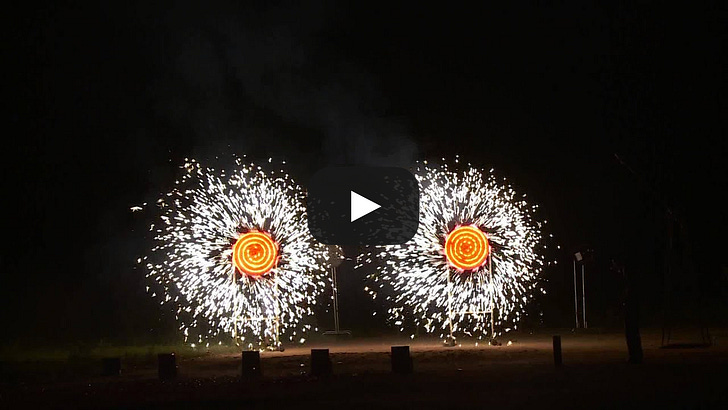 Stanley Jaki relates a story about a priest having this same question and grilling a witness; the witness finally claimed that the sun traced a circle (like a basket in a Ferris wheel) rather than merely rotating. But this contradicts several claims that it “rotated around its own axis”, and I wonder if the witness was intimidated by the seeming contradiction in her story and was trying to weasel out of her own confusion. If we treat the miracle as the result of some kind of illusion, this becomes slightly easier to explain; there are plenty of visual distortions that look like a spinning motion, and since it is the visual field itself that is spinning, rather than any particular object, it can be seen whether the object is a disc or not. “The sun seemed to fall to earth”: In what sense did it seem like this? If the sun had simply gone down in the sky, people would have said it was setting, the same way it does every evening. One witness does say this. Most other witnesses say it was terrifying, and they felt like they (as opposed to other people living near the horizon) were about to be crushed. If the sun had simply gotten bigger - wouldn’t people have just said it looked bigger? Isn’t this a more natural way to record that the sun’s disc seemed to expand? Fr. Jaki combs his selection of witness accounts (larger than mine), but is only able to find one person who says “it got bigger” in so many words, compared to the dozens who talk about it looming, or falling to earth. Some people say that the sun “left the sky” or “left its place in the sky” at this point. In what sense? If the object that appeared to be the sun at Fatima had been visible as an object of a particular size (let’s imagine it as a flying saucer), then not only would this have been remarked upon, but it would have appeared to threaten some parts of the crowd in particular (that is, a descending saucer would look like it was about to land on some specific area). But this is not the consensus description, and several people say they thought the sun might crush the entire world. Several witnesses say it approached Earth with a jerky or zig-zag motion. If I imagine something else approaching Earth - let’s say a jumbo jet or asteroid - I can tell that it’s approaching rather than getting bigger because there’s multiple components to its trajectory that let me separate size change from forward movement. When I think of this aspect, I imagine the sun very suddenly growing in size and brightness to take up a substantial fraction of the sky (maybe >50%?!), maybe with some jerky motion on the side.
Although it’s hardly scientific, I was charmed by John Touhey’s project of trying to visualize the miracle by using witness descriptions as prompts for ChatGPT. His work is a year old, and so several GPT iterations out of date. When I repeat his work with the current version, I get these:
Interlude: The Anti-Clerical UnionAs mentioned briefly before, 1910s Portugal was in a period of transition. In 1910, a group of proto-socialist revolutionaries overthrew the monarchy. The monarchy and church had been in cahoots, so the revolutionaries cracked down on Catholicism, closing the monasteries and persecuting the churches. This was a bold move - only an upper crust of educated urbanites were proto-socialist, and 99%+ of the country identified as Catholic, albeit at various levels of religiosity. In the 1920s, conservatives would regain the upper hand, overthrow the proto-socialists and restore a pro-church dictatorship. Still, the small urban educated ruling class of 1910s Portugal was a hotbed of atheistic anti-church sentiment. Probably the child-seers of Fatima were only dimly aware of this, but their prophecies were a spark entering a powder keg, and many of the more worldly witnesses were aware of this context. While reading through Fatima-related documents, I came across some pamphlets by Grupo Anticlerical, one of the era’s leading atheist organizations. They are totally irrelevant to our primary goal of trying to figure out what’s up with the miracle. But I love them so much that I can’t resist adding one as an interlude. I have slightly edited the machine translation for clarity and readability:
…
…anyway, Interlude over, let’s get back to the miracle. 2: The Skeptical ExplanationsRe-invigorated by the rousing prose of Grupo Anticlerical, can we come up with a materialist explanation for the sun miracle? 2.1: Pilgrim, Avert Thine EyesStarting in October 1917, doubters have focused on one obvious possibility: staring at the sun is harmful to your health. If you stare too long, you go blind. If you stare just slightly less long than that . . . maybe something strange happens? Just to get a particular theory out there: everyone knows that if you stare at a bright light source for a few seconds, you get a temporary afterimage - often pink or bluish-green - on your retina. Suppose the pilgrims stared at the sun. Their eyes would inevitably make microsaccades - small natural jerking motions - and the afterimage would appear somewhere slightly different than the true sun. This might look like the sun turning pink or blue and moving in a zig-zag pattern. Believers in the miracle counter this proposal in several ways. First, although it might explain the sun changing colors and dancing, it doesn’t give an explanation for spinning, sparkling, or falling to earth and threatening to crush everybody (exactly three times in a ten minute interval, no less). Second, although witnesses describe the sun changing color, they also describe everything around them changing color to match the sunlight, which doesn’t match localized afterimages. And one scientifically-minded witness specifically describes closing his eyes to see if there was a persistent afterimage; he says there was not. Third, there are no reports of eye injuries or blindness from a crowd that was, supposedly, staring straight at the sun for ten minutes. This is a good match to witness reports (that the sun was unusually pale and didn’t hurt to look at) and with Dalleur’s theory (that it wasn’t the sun). But it’s a bad match to any theory depending on eye injuries. Fourth, this would require Portuguese people to be total idiots. Everyone already knows bright lights cause afterimages. Surely if you stare at the sun for ten minutes and get some afterimages, you’re not going to freak out and start screaming about miracles and the end of the world. Even if the peasants had somehow remained ignorant of afterimages their whole lives, the scientists and doctors in attendance wouldn’t be fooled. If we are to keep this theory, maybe we should posit some retinal phenomenon much stronger than the ones we know. Everyone thinks they know how much an illusion can fool you - “yeah, okay, obviously the cookie that looks very slightly bigger will actually be the same size” - which is exactly why the really good ones, like the Checker Shadow Illusion, come as such a shock.
There’s no way around it: we need to hear from someone who has stared directly into the sun. August Meessen was a physics professor at a Catholic university, which sounds like exactly the job profile we want for this sort of thing. He found himself sufficiently interested in the Fatima miracle to stare straight into the sun for a few minutes and record what happened. From his paper:
By “initial phase”, he means the part where the sun looks pale and well-defined, like a full moon. This isn’t something I think needs explanation (see above), but he sure has explained it. Moving on:
This is frustratingly vague. Are the “impressive colors up to 2-3 times the diameter of the sun” just the normal aftereffects of staring at a bright object? Or something surprising even to physics professors? And the spinning?
This feels suspiciously like a just-so story. His explanation for the sun falling to earth to crush everyone - which he also did not see - is equally ad hoc:
If true, it sounds like you should be able to generate this effect not just by staring at the sun (ill-advised, causes blindness), but by staring at the moon. I would like to test this, but unfortunately I am writing this on the night of a new moon; I’ll check back in a month. Still, I am skeptical that no human being living before 1917 AD ever figured out that staring at a celestial body long enough would make it appear to fall to earth and crush you. Compare to much gentler illusions - like how the moon looks bigger right when it starts to rise - which everybody knows about. I was able to find a thirdhand report (Fr. Stanley Jaki → G. J. Strangfeld → consultation with bishop) of another sun miracle investigator, one “Professor Dr. Stöckl” in Germany, who made a similar experiment:
These reports are suggestive, but weaker than all but the barest Fatima testimonials. Dr. Messeen admits as much, saying that “I didn’t look at the sun for a sufficiently long time”. Can we find people even more committed - or reckless, or masochistic - than Professors Messeen and Stöckl? Absolutely yes: there was a whole subfield of late 18th / early 19th century psychophysicists who experimented with staring at the sun for long periods, many of whom went blind. Joseph Plateau (1801 - 1883, went blind in 1843²) summarizes their work in his aptly-named On The Contemplation Of Bright Objects. He lists twenty-six scientists who tried staring at the sun for a really long time. Most describe what we now recognize as typical retinal afterimages, and Plateau spends most of his time talking about how long these last and what colors they pass through. The only one of Plateau’s sources who reports anything even slightly interesting to us is Robert Darwin (father of Charles; cf. Secrets of the Great Families). After stating that:
…he mentions how
Here is pallor, and at least a hint of motion. But it’s pretty different from spinning, and not really clear how it relates to the sun miracle. Gustav Fechner (1801 - 1887, went blind in 1839) may have stared for even longer; you can read more of his story - including his ensuing insanity and subsequent attempts to found a new religion - on Adam Mastroianni’s blog. But all that he records about his ill-fated experiment is that:
These people are great, and they all sound like minor Sam Kriss characters. But after whole careers dedicated to staring at the sun much longer than any normal person would ever try, they report only the barest hints of odd phenomena. Indeed, if anything they saw less of interest to the Fatimologist than Profs. Messeen and Stöckl. Worse, all of these authorities saw their phenomena after seconds to minutes of deliberate staring. Surely if it had taken a minute of staring at the sun before anything happened, some of our eyewitnesses would have mentioned this; after all, several mention that they were starting to doubt after the child-seers’ deadline had passed a few minutes earlier. But by all accounts, the miracle was near-instantaneous. Although Messeen and Stöckl’s reports of miracle-like phenomena are intriguing, it doesn’t seem like they can be the whole picture. Let’s move on. 2.2: Aurora Borealis? At This Time Of Year? In This Part Of The Country? Localized Entirely Within Your Kitchen?Could the miracle at Fatima have been some kind of weird weather phenomenon? The main argument against is that if it were a common weather phenomenon, it would not have awed and terrified tens of thousands of people. But if it were a rare weather phenomenon, then the seers’ successful prophecy that the rare weather phenomenon would happen at solar noon on October 13 1917 becomes almost as impressive as an outright miracle. The argument in favor is that dozens of people have written books and papers about this possibility, we would feel remiss if we didn’t mention them, and anyway it gives us the opportunity to look at pretty pictures of interesting weather phenomena. 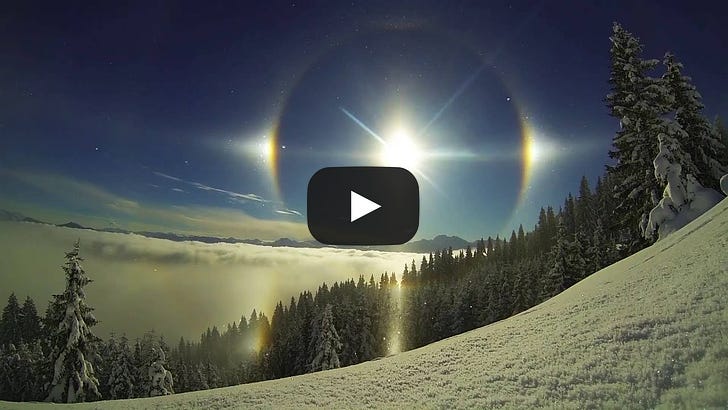 This is a sun dog. It’s caused by ice crystals in the upper atmosphere that refract sunlight in a very specific way. It’s very cool, but aside from a resemblance to a wheel, it looks nothing like the miracle of Fatima. A sun dog doesn’t have any unusual colors, it doesn’t change size, and it doesn’t spin (I’ve embedded a YouTube video not because a still image would be misleading - it wouldn’t be - but just in case you want to see for yourself how completely motionless it is). It’s just a halo shape with two smaller illusory suns on either side of the real one - something which no one at Fatima reported.
This is a solar corona³; cloud iridescence is a related phenomenon. I don’t know how much work the exposure length is doing in this particular photo, but I’m guessing more than zero. Coronae are also very pretty, and might explain the description of wheels and colors. They seem surprisingly common for something that I can’t ever remember seeing, supposedly happening several times a year in most locations. But they don’t spin, the colors don’t change or stain the surrounding landscape, and they don’t fall to earth and crush people. Let’s keep this one as a backup option and move on.
This is a dust storm. Steuart Campbell wrote a paper arguing that the miracle was caused by one of these, and I admit if I saw this I would start praying pretty hard. Dust storms can change the color of the sun (including unusual colors like green or blue). And very, very charitably, whirling dust could look like the sun itself spinning around, and the thickening and thinning of dust could look like the sun approaching or receding. But this would require a dust storm localized to a 20 mile region of Portugal which does not, technically, have any dust (and where it was, technically, raining at the time). Campbell proposes that perhaps a storm blew a 20 miles x 20 mile dust cloud from the Sahara out to the Atlantic, then onto Fatima for ten minutes during a break in the rain, then back to the Atlantic again. But I don’t think any dust storm has ever behaved in quite this way. If it did, it probably wouldn’t be at the exact moment predicted by child-seers months in advance. 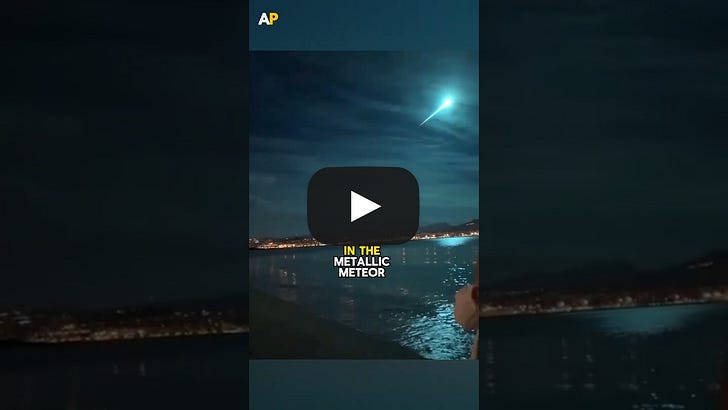 At this point, we might as well talk about literal meteors. The way I’m imagining it is this: as a meteor approaches Earth, it breaks up into three big parts and a host of smaller particles. They strike the atmosphere head-on, from the approximate direction of the sun. The small particles hit first and make a firework show. Then the three big pieces hit, producing multicolored fireballs (meteors can absolutely stain the sky bright colors - see the video). Finally, they burn out a few miles above the ground, , convincingly producing the appearance of the sun falling to earth and nearly striking the spectators. This could even explain the warmth and dry clothes - a local meteor strike produces a lot of heat! I like this because it’s the only one that takes seriously the facet of the event which most impressed the witnesses - the part where it looked like the sun was plummeting to earth and about to kill them. But against it: would a rain of micrometeorites really look like the sun was “dancing”, “spinning”, or “zig-zagging”? Aren’t most nearby meteor strikes very loud? (the Fatima event was, according to witnesses, silent) Don’t they usually break windows? Aren’t most meteor strikes of this size visible for hundreds of miles, not just the twenty miles from which we have witness testimonies? Wouldn’t the strike have to be remarkably head-on, and remarkable close to the position of the sun, in order to look like a solar phenomenon rather than a long streak? Aren’t most meteor fireballs visible for between a few seconds and a minute, not the ten minutes of the Fatima event⁴? And if there were some extremely unusual meteor strike that was the exception to everything, wouldn’t it still be pretty surprising for it to happen at the exact time and place predicted by child-seers months in advance?
We come to the unpromisingly-titled Derivation of equations of the model of the dynamic behavior of the three-dimensional atmospheric cloud of electrically charged ice crystals under the influence of electrostatic forces, Artur Wiroski argues that Fatima was a three-dimensional atmospheric cloud of electrically charged ice crystals under the influence of electrostatic forces. Actually, he offhandedly mentions Fatima in three sentences, with the majority of the paper looking more like the image above - but he eventually makes it into a Guardian article where he emphasizes that yes, he is trying to explain the miracle of the sun. However, if I’m understanding him correctly, he says that his theoretical ice crystal phenomenon can only happen when the sun is at an altitude below 22 degrees. But during the Fatima miracle, the sun was at 42 degrees (and Dalleur’s mysterious light source was at 30 degrees), so none of this applies. I’ve tried to include pictures of all the phenomena I mention in this section. I failed for this one, because it’s never been observed to occur in nature. It’s just some incredibly weird thing that one scientist says ice crystals might do if parameters were ever exactly right, with such a precise definition of “exactly right” that it’s never happened in real life. If it ever did happen, it probably wouldn’t be at exactly the moment predicted by child-seers several months in advance. 2.3: Everyone’s Mad Here Except You And MeAnother common response calls the Sun Miracle a “mass hallucination”. Can 70,000 people really hallucinate the same thing? “Mass hallucination” on Wikipedia redirects to List Of Mass Panic Cases. The Miracle of the Sun is on there, but listed as “(disputed)” - the only item to earn such a parenthetical. The other fifty items mostly belong to three categories:
Starting from the bottom: In 1995, a man in New Delhi noticed that an idol of the elephant-god Ganesh seemed to be really drinking the glass of milk left as an offering. The story went viral - or as viral as things could go in 1995 - and Hindus around the world noticed the same thing. There was “an increase in overall milk sales in New Delhi by over 30%”. Scientists investigated and determined that a sculpted stone elephant trunk could sometimes absorb milk through capillary action. This was a story about rumor, interpretation, and context, but not really “hallucination”. The drinking effect was real. The Halifax Slasher was a typical supercriminal story. Two women reported being attacked by a mysterious and oddly-dressed knifeman; others followed. “Vigilante groups were set up on the streets, and several people, mistakenly assumed to have been the attacker, were beaten up; business in the town was all but shut down”. Although there was a Halifax resident with a history of knife crime, “he was quickly ruled out of the 1938 attacks on account of his large nose, which none of the 1938 victims had described”. Eventually several of the victims admitted to having made it up, and the whole thing went away. Supercriminal cases most often result from people making things up. Occasionally, seemingly-honest people report seeing the supercriminal in poor lighting conditions across a dark alley or something. But even if we consider these to be “hallucinations”, it is usually the one or two most vulnerable people in a town at the time. I can’t find any examples of true “mass hallucinations” - entire towns seeing a nonexistent supercriminal or monster at the same time. Koro is the psychosomatic disease par excellence; I’ve written about it before here. Victims, always male, believe that their penis has disappeared or retracted into their body; they often blame penis-stealing witches. Koro occurs at some very low background rate in every society (including ours), but occasionally wells up into mass panics in primitive cultures that take witchcraft seriously and have traditions of worrying about this sort of thing. Still, I don’t think any panic ever affects more than half of a village’s males, and usually not at the exact same time; it’s a smoldering panic over days or weeks, not a single instant of horrified realization. Also, although I’m not sure and would love to learn more about this, I don’t think the koro victim is having a visual hallucination of not having a penis at all. I think they think their penis is much smaller or shorter than it should be - which only requires some sort of obsessive worrying and (perhaps motivated) mis-remembering of its normal length. None of these are “mass hallucinations” in the sense where the sorts of visual hallucinations typical of certain mentally ill people occur en masse in a crowd of thousands with >50% prevalence - that is, the type of mass hallucination that would be required to explain Fatima. As far as I know, there are no confirmed cases of this ever happening. Still, from the Hindu milk miracle, we can learn that religious people can miss a real phenomenon for a long time, then notice it all at once with great fanfare. And from the koro cases, we can learn that a rare phenomenon can become more common in situations of widespread belief and social pressure. Interlude: It Seems Like Years Since It’s Been ClearThis is around the stopping point of the previous Substack discussion. I’ve tried to cover most of Ethan and Evan’s arguments, go through the chain of rebuttals and counter-rebuttals, and maybe pull on a few of the more tempting loose threads that they’ve left. As best I can tell, this level of investigation ends in a decisive victory for the believers. They have a stock of seemingly-unimpeachable testimonies; the skeptics have only a few leads that don’t seem on track to pan out. Eye damage can maybe produce a few odd effects, but - in the entire history of tens of billions of people living daily underneath a sun that they are able to view at any moment - we have not yet found anyone who reports the full constellation of Fatima experiences just from seeing the sun. No exotic weather phenomenon is a perfect match. Mass hallucinations are real but comparatively weak. At least this is my assessment. Skeptic blogs don’t agree. They propose one of these things (with no consensus as to which one) then act like they’ve debunked the miracle, then skip to the really important part: laughing at how obviously wrong it is. I’ve written before about my disappointment in the skeptical community and why it worries me, and here I feel it as acutely as ever. Sitting with my disappointment and trying to put it into words, I think my worries come down to a tangling of the Bayesian graph. The straightforward Bayesian way to do this is to start with some prior probability that there is a God who causes miracles (let’s say 1%), notice that the evidence for Fatima being a miracle naively seems very high (let’s say 90%), multiply out, and end up with a higher (8.3%) probability of God’s existence and a lower (8.3%) chance that Fatima in particular was miraculous. This is liberating. It lets you say “This piece of evidence is very strong, but my prior is very low, so even without being able to debunk the evidence, I continue to disbelieve.” But doing this the straightforward Bayesian way doesn’t work. First of all, what would it mean to naively (even before factoring in that you don’t believe in miracles) say Fatima seems 90% likely to be miraculous. Before factoring in that you don’t believe in miracles, surely the probability is much higher! But also, if you try this, then as soon as you find two similar miracles (I’ve been told the next two are the Eucharistic Miracle of Lancio and the Miracle of Pellicer’s Leg) your probability of God goes up to 88%! But I don’t think there’s any real atheist whose probability would rise in such a straightforward linear way. You need some kind of model where either it’s almost trivially possible to generate an arbitrary number of convincing-yet-false miracles, or it isn’t. But this doesn’t match the “virtuous” approach of addressing each miracle on its own terms - where you try to understand the Sun Miracle by learning things about the sun, or entoptic phenomena, or 1910s Portugal. And it does match the skeptical approach I’m complaining about, where you say “it’s probably swamp gas or something, lol, imagine being so dumb that you believe in miracles.” So I cannot object too strongly. Still, my greatest fear in this and all other problems of reasoning method is the trapped prior, where people take this too far and become impervious to evidence entirely. I think it’s worth untangling the whole Bayesian graph, trying to keep this whole structure in mind, if it prevents people from accidentally propagating an update down a logical chain, then propagating the same update back up the chain, again and again, ad infinitum, until they become arbitrarily sure of themselves. “We can be sure all miracle claims, even the convincing ones, are false, because there’s no God - and we can be sure there’s no God because all miracle claims are so risibly false.” Even if this is harmless - even if it turns out correct in the case of religion - it teaches such dangerous habits of mind that I’m willing to err in the direction of going way too far taking such claims seriously - at least in the “entertaining an idea without accepting it” sense. Everyone gets to decide what is and isn’t worth their time. I think deciding that these sorts of miracles aren’t worth your time is fine, as long as you’re propagating all the probabilities correctly and not accidentally treating your own hurriedness as a cause to update the rest of your belief graph. As for me, I don’t know, I just find this fascinating. In Evan’s skeptical take on the conversation, he starts strong, but after the topic switches to Part LXXVII of Dalleur’s discussion of photograph angles, he stops and asks:
We’re addressing what Stanley Jaki called the most important event of the 20th century! We’re debating the existence of God, the most important question possible! If God is real, then nothing could be more important than establishing this: in the best case, we will come to believe; at worst, we will be able to tell St. Peter that our failure was honest and not from lack of trying. If He is not, then we can do whatever we want here on Earth, and surely one of the noblest ways to spend our short existence is expanding the frontiers of the known into the borderlands of mystery! In particular, if the God of Fatima exists, we are in deep trouble. I said I wouldn’t talk about exactly what the Virgin Mary told the child-seers, but the short version is that the First Secret was a very, very nasty vision of Hell. It looked exactly the way a ten-year-old child might expect: a lake of fire populated by ebon-skinned demons and horrendous tortures; the lead child-seer said that if the Virgin had not begun by promising that she personally would never go there, “she would have died of fright”. As it was, the consequences of the vision were grim. The child-seers got it into their minds that they could perhaps save sinners from the fire by “doing penance”. They drank only stagnant, scum-encrusted water, in the hopes that this might help some otherwise hell-bound soul; on some especially hot days, they ceased drinking water at all. When they found particularly painful ropes, they tied them around their bodies so hard that they bled (later, the Virgin mercifully told them they didn’t need to wear the ropes at night - they could stick to daytime only). After so many mortifications, they were easy prey for the Spanish Flu; two of the three perished before their tenth birthday. As they lay dying in the hospital, they were recorded as freaking out every time they saw a nurse or visitor with “immodest dress”, saying that they would not act in such a way if they knew how long Eternity was, or what awaited them there⁵. If all of this is the true opinion of the Lord of the Universe, we had better figure it out quick. If it isn’t, then the words of the Grupo Anticlerical:
…take on new meaning and urgency. I will admit my bias: I hope the visions of Fatima were untrue, and therefore I must also hope the Miracle of the Sun was a fake. But I’ll also admit this: at times when doing this research, I was genuinely scared and confused. If at this point you’re also scared and confused, then I’ve done my job as a writer and successfully presented the key insight of Rationalism: “It ain’t a true crisis of faith unless it could go either way”. But now that we’ve let Ethan, Evan, and the rest dig us into as deep a hole as possible, let’s try to dig our way out. 3: Our Lady Of Everywhere ElseOne question that Ethan, Evan, and Dalleur fail to ask is: what if people are basically always seeing the sun spin and change colors and and fall from the sky? What if this is the most common experience in the world? What if it’s a minor miracle every time you get more than a handful of people together and they don’t fall down in awe and terror at the manifestations of the sun? Goncado Xavier de Almeida Garrett is one of the star witnesses of the Fatima miracle, quoted above. His testimony comes from a letter written to Father Formigao, a local priest, about two months after the event. But although Ethan and other pro-Fatima sources quote the testimony at the beginning of the letter, they conveniently leave out what follows:
Many days and many times? Remember, the Virgin Mary first appeared at Fatima on May 13. She promised to return on the 13th of each successive month until October, when she would perform a great miracle. But she never said she wouldn’t perform any miracles until October. So on the 13th of each month, a medium-sized crowd gathered. They didn’t leave disappointed. I won’t include every claimed supernatural occurrence, but here are the ones relevant to our subject: Olimpia de Jesus, about July 13:
Joaquim Inacio Vicente, about August 13:
Leonor de Avelar e Silva Constancio, about August 13:
Manuel Pedro Marto, about August 13 and September 13:
Joaquim Xavier Tuna, about August 13 and September 13:
Then there was the great miracle on October 13. Remember, I was only able to find a handful of negative testimonies - people who said they didn’t see it. One was from a woman named Leonor das Dores Salema Manoel, who said she saw “nothing of what others saw”, at least at Fatima. But on the drive home from Fatima that evening⁶:
The next occurence was early the following year. From the parish inquiry’s interview with Jacinto de Almedia Lopes:
And next, from a letter by Gilberto Fernandes dos Santos:
And next, from Dr. Henrique Weiss de Oliviera, describing events on May 13, 1923:
And from Joao Amael, on October 13, 1925:
Amael’s report of a miracle in 1925 is the last recorded case I can find at Fatima. I don’t know if this was when the sun miracles stopped happening there, or when people stopped including them in the Critical Documents collection. In either case, there were plenty of other places willing to pick up the torch. 3.1: The Ghiaie VariationsAs far as I can tell, Fatima was only the second-largest crowd to have ever witnessed the Miracle of the Sun. The largest was a group of 200,000 - 300,000 people in Ghiaie, a tiny village near Bonate, Italy. On May 13th, 1944 - the same day of the year that the child-seers of Fatima saw their first apparition - a seven-year old girl went out to pick flowers and had a vision of the Virgin Mary. The Virgin promised to return to her for nine successive evenings; at some point (although I cannot follow this part of the story) she must also have promised to return four times the following week, as large crowds gathered in expectation. According to my source, on the ninth appearance:
The blog says there were similar solar phenomena during the tenth and twelfth appearances, as well as on the following June 13th and July 13th⁷. All of this is from a random Catholic blog; can we find clear testimonies? The miracle of Fatima was heavily promoted by Portuguese, Vatican, and American Catholics, leading to a large body of sources being available in English. The Ghiaie apparition has gotten less attention, and so I can find fewer testimonies, have had to clunkily machine translate some things, and had a harder time tracing the exact chain-of-transmission. Still, here’s what we’ve got, mostly from here: Don Giuseppe Piccardi:
Slightly hard to figure out from the machine translation, but I think this is Bishop Adriano Bernareggi:
Don Luigi Cortesi, a local seminary teacher who was a strong skeptic of the apparitions and even borderline-kidnapped the child-seer to convince her to recant:
From the parish bulletin of Tavernola, the exact author is slightly confusing but it was either written by or signed/confirmed by Piero Bonicelli, local provost:
There may be more testimonies at this site, but they’re in very old scanned documents that it would be too time-consuming to stick into my machine translation pipeline. Another source says that “On February 24, 1994, [the TV show] ‘Detto tra noi' (Raidue), interviewed some witnesses, who confirmed the solar phenomena of May 21 1944 that were watched by many people“. I think a few hours extra work by an Italian speaker could produce at least five or ten extra Ghiaie testimonies, maybe many more. But as it is, we have enough to try something interesting: let’s recreate Dalleur’s analysis, but for Ghiaie. At 6 PM, the sun was shining from almost due west. For the sunlike light source producing the miracles to mimic the real sun, it would have also had to have been to the west of Ghiaie. If we assume it was the same distance as Dalleur’s Fatima light source, it would have been about 2-3 miles to the west of Ghiaie, which puts it above the village of Merate. We know from the last testimonial that the phenomenon was seen clearly in the village of Tavernola Bergamasca, which is about 22 miles from Ghiaie and 25 from Merate. An Italian source also reports sightings in Brescia and Piacenza, each about 35 miles from Ghiaie. So a Dalleur style analysis might conclude that this event also had a 25 - 35 mile visibility radius, similar to Fatima’s.
…unfortunately a 25 mile circle centered on Merate includes the city of Milan, population 1.1 million, which produced no reports of unusual solar activity. And Milan had clear line-of-sight to Ghiaie and Merate, and so probably better viewing conditions than Tavernola, which (you can see from the map above) has some intervening hills. Might the miraculous light source have been like a spotlight, aimed in only one direction - that is, east to Ghiaie and Tavernola, but not southwest to Milan? This would contradict Dalleur’s Fatima analysis, since one of the most dramatic testimonies comes from the city of Minde, which is on the opposite side of the presumed light source from Fatima. Without some kind of - no pun intended - Hail Mary - I don’t think you can maintain a theory where this phenomenon gets transmitted through normal geography. 3.2: Mary Such CasesAt this point, the reader will get the general idea, and we can start moving faster, as there is a large amount of ground to cover. Heroldsbach, Germany, 1949: The Virgin appeared to four young girls. Rumors spread, crowds gathered, and on December 8th, 10,000 people saw another sun miracle. Here are about a hundred testimonies, gathered with typical German precision. An expert meteorologist brought in to investigate summarized them as follows:
The Catholic Church condemned the apparition and miracle as fake, even going so far as to excommunicate the child-seers. Later they relented slightly and un-excommunicated them, but their official position is still that nothing supernatural happened - this sun miracle was merely an overly enthusiastic hallucination! Necedah, Wisconsin, USA, 1949: A housewife named Mary Ann Van Hoof claimed to have seen the Virgin Mary. This is among the less plausible visitations: Van Hoof, who was raised Spiritualist, also claimed to have seen Joan of Arc, George Washington, and Abraham Lincoln. The messages she channeled seemed less like tidings of peace and love than like a particularly unhinged Truth Social post, and included warnings about the Rothschilds. Still, rumors spread, crowds gathered, and on August 15 1950, 100,000 people showed up hoping for a miracle. As for what happened next, Wikipedia says that “witness accounts vary significantly”. WaPo says that “observers saw nothing unusual” and LIFE mentions nothing out of the ordinary. But other sources report sun miracles, and I was eventually able to track down three testimonials in a summary of articles from a local newspaper, which states that “after a rainy morning…”:
The Catholic Church condemned the apparition as fake, and declared van Hoof’s followers “a cult”. Lubbock, Texas, USA, 1988. Really? Really? Nothing could be more natural than for the Queen of Heaven to appear to kind-hearted shepherd children in Portugal. Even an appearance in war-torn West Germany makes a certain amount of sense. But Lubbock, Texas? I suppose this must have been how the cool Sanhedrin members felt when they learned the Christ hailed from Nazareth. But that doesn’t make it any better. Anyway, rumors spread, crowds fathered, and on August 15, 1988, a crowd of ~10,000 people witnessed the Miracle of the Sun. Here is an indirect testimonial, a man describing his wife’s experience:
Here we have something special: according to the Los Angeles Times, one pilgrim took a poll about who saw what:
We don’t know how the 247 people were selected, but very naively it seems like 2/3 of those present saw the sun spinning. This also matches the first person listing 2/4 family members. (the Catholic Church withheld judgment, refusing to either endorse or condemn the visions) Benin City, Nigeria, 2017. On October 13 2017, crowds gathered around the world to celebrate the 100th anniversary of the Fatima miracle. One such commemoration happened in Benin City, Nigeria, where 30,000 people attended the National Marian Congress and witnessed the re-dedication of Nigeria to Mary’s Sacred Heart. As the speakers commemorated the Fatima event . . .
. . . someone pointed to the sky and shouted “It’s happening again!”. It was, indeed, happening again. You can read about ten testimonies here. I’ll quote just one, from Brother Joseph Obiemeka Azih:
I was able to confirm that some of the people whose testimonies were listed on the site are real Nigerian Catholics whose existence is attested in other sources. Two weeks later, there was another Nigerian commemoration of the Fatima anniversary, in Lagos, and a sun miracle happened at that one too. 3.3: Made You Gaze At MedjugorjeMedjugorje (Bosnia, 1981) is in many ways a typical Marian apparition site, much like the ones on the list above. Child-seers, warnings to repent, sun miracles, you know the story by now. But in Medjugorje, the miracles keep happening. Pilgrims - or, more cynically, tourists - go there just to see the sun miracles, and many come back satisfied. You can find blogs by people who went to Medjugorje hoping to see a sun miracle, and on their first or fifth or eighth or whatever day, there’s a crowd of people, yelling and pointing at the sun, and they look up and see it too. Here’s an account from Catholic blogger Father Dwight Longernecker:
Some of these tourists capture the phenomenon on video. Unfortunately, the videos are of three types:
A good representative of the first category is this video from 2023: 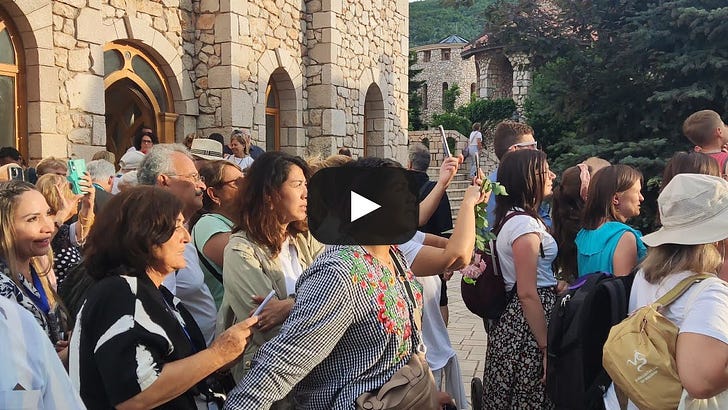 The quality is very high. You can see everything clearly - at least on the ground. The crowds are obviously seeing something. The videographer interviews some people in the crowds and they say that the sun is spinning. But the sun itself just looks like a bright smudge. The videographer apologizes constantly for this and seems to think that if he could film it clearly, we would all agree it was spinning. Here’s another one like this:  Same videographer, different witnesses, same story. We move on to the second category, videos that claim to capture the phenomenon but look more like a cell phone camera having a stroke. Here’s one from 2009:  Some sample testimonials from the comments section:
…
…
…
… At least a few of the people who have seen the miracle in person describe the video as not completely foreign to their experience. I’m still a little skeptical because of even worse videos like this one:  The sun seems to be expanding whenever he raises the camera, and shrinking whenever he lowers it. This is some kind of auto-brightness adjust. If it wasn’t, and there was a real miracle going on, at least one member of the crowd would be watching it instead of praying quietly. The best video I could find of the Benin City, Nigeria, 2017 miracle is also in the cell-phone-stroke category:  …and there is another one from the same miracle (remember, there was a crowd of 30,000+ for this one) where the sun seems completely normal.  But that brings us to the third category, the one video which is actually good. In 2000, God told a prayer group in the Philippines to build a very big church. If it was meant as a divine test, they passed:
Since then, people have reported miracles at the site regularly. Most interesting for our purposes, some say that the Miracle of the Sun occurs there every Divine Mercy Sunday (the Sunday after Easter). I’m not sure this is right - I can only find records of it occurring in about a third of years - but that’s still a pretty good record. Here is the miracle from 2010 (starts at 3:11): 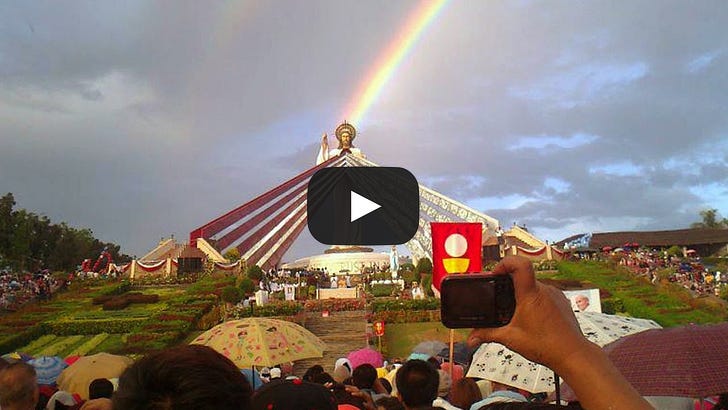 Although the sun isn’t vastly clearer than any of the other videos, it’s obvious in this one that the oohs and aahs of the crowd match up with the pulses recorded on video - so it doesn’t seem like it can just be a camera failure. A more experienced critic on Reddit agrees:
I would have expected that having dozens of videos of the sun miracle would finally clarify things. Instead, they’ve only gotten more confusing. The part that should be most easily captured even on blurry cell phone footage - the sun changing color and staining everything around different colors - is totally absent. Yet it seems like something must be happening to impress all of these crowds, and that the camera is able to capture some of it. 3.4: Any Little Maid That Walks In Good Thoughts ApartWhat updates should we make based on all these other miracles? First, we must discard our exotic meteorologic hypotheses. It might be barely possible for a rare dust storm, or a perfectly-timed ice whirlwind, to coincide with a prophecied apparition once. For it to do so every time a little girl says she sees the Virgin Mary defies belief. Second, we may want to rule out the actual Virgin Mary, at least insofar as she can be considered allied with the Catholic Church. It seems that sun miracles are common even at apparitions which the Church denounces as misguided or heretical; surely the Virgin would not want to confuse people by lending miraculous signs to false prophecies. (a true believer may posit that the miracles associated with real apparitions were caused by the Virgin, those associated with fake apparitions were caused by demons, and those that were neither - like Salema Manoel on her car ride home - were the demons again, trying to confuse us. I can only cite the usual prior against conspiracy theories; the conspirators being demons hardly makes things better.) This seems to leave illusions/hallucinations as a leading candidate. We previously came up with four arguments that seemed to rule these out:
To these, we can add two new objections:
I will not be able to form an opinion on the Filipino video; I leave it for someone with better understanding of photography and film. In the rest of this post, I’ll try my best to rebut the other four objections: Dalleur’s distant testimonies and shadow analysis, lack of retinopathy, lack of non-Fatima sun phenomena, and more complex visions. 4: Contra Dalleur On Distant Testimonies And Shadow AnalysisA refresher: Dalleur is able to find four distant testimonies of the Fatima miracle:
I hoped to be able to debunk some of these testimonies, but at least in the first case, that of the schoolboy Joaquim Lourenco, the opposite was true: the harder I looked, the more Alburitel testimonies I found, until I ended up with three. All three seem to be talking about the same event - a crowd who gathered outside the school to watch the phenomenon. Luckily, one of the witnesses adds a key detail. From Jaki’s God And The Sun At Fatima, p. 293:
So it seems the people of Alburitel were expecting a miracle of the sun, one person saw it and called out, a crowd gathered around them, and all three witnesses were from this crowd. This is, at least, an independent replication of what happened at Fatima, but we cannot describe it as uncontaminated, or immune to possible expectation/suggestion effects. Moving on to the poet - Alfonso Lopes Vieria by name - this testimony is on shakier ground. We hear it secondhand, from the writer of a book on Fatima who claims to have interviewed the poet almost twenty years later - and then from a confirmation by his widow thirty years later, who told another writer that yes, he definitely said it. But in his book, Jaki raises several reasons for doubt:
I think this testimony is on shakier evidence than most of the others. Moving on to the housewife, Guilhermina Lopes da Silva, her story seems real enough, but she tells us that “I could not go [to Fatima] because my husband was an unbeliever.” She knew a miracle was predicted, wanted to see it, but had to stay home. She says that she was “looking towards the mountain” when it happened - I can’t tell whether she means she was deliberately looking for the miracle, or just happened to be gazing in that direction, but I don’t think she can be described as uncontaminated. From the child, Albano Barros, we have only two sentences, not enough to know whether he was contaminated or not. But he was nine years old, and his account was collected thirty years later. How much opportunity might there be for recall bias to creep in when asked to remember a miracle that happened thirty years ago when you were nine? These are relatively weak counterarguments - they perhaps give us a tiny sliver of ability to doubt these testimonies, but do not demand doubt. Are there any affirmative reasons to doubt Dalleur’s story of an objective miracle that took place in consensus reality and was visible according to normal geography? I have seven. First, there were about 300,000 people living within a 20 mile radius of Fatima in 1917. If 50,000 of those had gone to Fatima itself, and another 100,000 were in the southeast area blocked by mountains, then 150,000 people outside Fatima still should have seen the miracle. Of those 150,000, we have four to six testimonies - compared to 100+ testimonies from the mere 70,000 at Fatima itself. Is this surprising? Maybe not: it was a rainy day; many people stayed inside. And the event might have been very dramatic at Fatima, but only slightly visible as an odd flickering on the horizon elsewhere. Maybe you had to be outside in the rain, staring directly at the right part of the horizon, and not that many people were in that category. Against this, the child 6 miles from Fatima and the schoolboy 8 miles from Fatima both described huddling in terror, thinking the world was coming to an end. This doesn’t sound like something only slightly visible as an odd flickering on the horizon. If Dalleur’s location hypothesis is correct, then the child is only 3 miles from the event source - the same distance as Fatima - but the schoolboy is still about 10 miles. Dalleur must believe that the event seemed cataclysmic up to at least a 10 mile radius. So where are all the other distant witnesses? Second, we have at least one explicit negative distant witness. This is Leonor de Avelar e Silva Constancio, who we met before - she missed the miracle when her car got stuck in a ditch a few miles outside Fatima. But she describes the accident as happening “shortly after leaving Torres Novas”, which would put her about seven miles from the event. If it was visible within a twenty miles radius, she shouldn’t have missed the miracle at all2! Believers argue that Torres Novas’ view of the event was blocked by the hills. But as we saw above, if we believe Dalleur’s location, we can use trigonometry to estimate the light source’s elevation at >1 mile. This could not have been blocked by the small hills near Torres Novas, and so the explicit negative evidence from Constancio - not to mention the implicit negative evidence from the other 40,000 residents of Torres Novas - becomes damning. Third, Dalleur argues that the light source was hot enough to rapidly dry clothes three miles of land distance away. If so, the area directly underneath it - which includes the small village of Geisteria - should have more or less ignited. But there is no record of any damage to the small villages in that area. Of course, God and the Virgin Mary can presumably choose to have heat work however they want - maybe this was a perfectly uniform heat defying all normal laws of radiation - but this seems somewhat against the spirit of the exercise. Fourth, the witnesses at Fatima agree that a small window opened up in the cloud cover that let them see the sun (or “the sun”). Using the same trigonometry and some educated guesses about cloud height, the window in the clouds must only have been a few thousand feet wide. So why should people many miles away have been able to see the sun at all? Were they using a different window? Fifth, Dalleur claims the light source was not the sun at all, but some sort of artificial miraculous object. But if this were true, how did the miracle end? No witness describes seeing the pale sun disappear. They only say it went back to its usual place in the sky. Later in the day, the clouds cleared and it became a normal sunny day. But nobody reports seeing two suns. At some point, either the first light source must have vanished (which would have been noticed), or there must be two suns in the same sky (which would also have been noticed). Therefore, it seems like the miraculous light source must have been the sun after all, which throws Dalleur’s calculations into disarray. Sixth, although I was not personally able to follow the work Dalleur did to argue that the shadows in the photographs proved two different light sources, I corresponded with two people who did more thorough analyses:
Seventh, although Dalleur’s theory somewhat makes sense for Fatima, it stumbles for Ghiaie and becomes completely incoherent for Benin City. At Ghiaie, the miracle was seen fifteen miles away to the east (in Tavernola), but not fifteen miles away to the southwest (in Milan), even though the line-of-sight from Milan was clearer. In Benin City, the miracle was localized entirely to one large field, while the rest of the city (population 1.5 million) saw nothing. For all of these reasons, I don’t think we can conceptualize the Fatima miracle as occurring in a geographically sensible way. It was either localized entirely to the crowd at Fatima, or seen by a tiny number of subsidiary groups (like the group of schoolboys at Alburitel) rather than the large region within viewing distance of the supposed event. This removes one of the major barriers to illusion/hallucination-based explanations. 5: I Feel The Eyes Are Slowly MeltingWe previously identified three barriers to explanations based on optical phenomena: the lack of retinal burns/blindness, the lack of similar phenomena observed outside Fatima, and the inability to explain complex visions like the Cross or the Virgin’s face. As we assess the situation with retinal burns, it may be helpful to start with the opthalmalogical journals, which recognize a condition called Medjugorje maculopathy. Some of the pilgrims who look for sun miracles at Medjugorje do get retinal burns (or other forms of eye injury) from staring at the sun too long. I can’t access all the papers, but this one discusses four cases:
These fascinate me because they suggest that the type of staring-at-the-sun that lets you see the miracle, and the type that causes eye injury, cannot be entirely different. After all cases 3 and 4 got both! But they also suggest that eye injuries are less common than miracle viewings. After all, a million pilgrims go to Medjugorje each year. A substantial fraction either see the miracle, or at least look for it. But the cases of Medjugorje maculopathy in the literature number in the single digits. Medical risk factors usually fall within a certain window of dangerousness. If they’re not dangerous at all, then there’s no risk. But if they’re maximally dangerous - jumping off cliffs, sticking one’s hand in fire - then everyone notices and nobody does them. It’s the things like drunk driving, or smoking, or leaving a child unattended near a pool - risky practices which often go fine but sometimes lead to disaster - that really get you. Medjugorje maculopathy seems to be in this same gray area. Can we quantify the risk further? Solar eclipses provide an analogous situation of thousands of people staring at the sun for several minutes. Authorities warn against viewing eclipses without protective equipment, but not everyone heeds their advice:
Scientists have tried to measure the number of extra retinopathy cases presenting at eye clinics after major eclipses. A survey after the 1999 British eclipse found 70 patients, all of whom made full recoveries after six months; another after the 2017 US eclipse found 113. If 154 million Americans viewed the 2017 eclipse, and only 74% used proper eclipse glasses, that suggests that 40 million people viewed the eclipse without glasses. Suppose that 3/4 of those people were at least slightly responsible - they only took short glances, or they only looked during full totality. That’s still 10 million people irresponsibly staring directly at the sun. Only ~100 of these made it to a clinic to report eye damage, for a 1/100,000 injury rate. This paper on a UK eclipse goes into more detail about the exposure times:
Taken seriously, this is pretty surprising. If there were a simple dose-response relationship between sun-staring and damage, we would expect everyone with damage to have stared longer than a certain threshold. But in fact, we get a wide variety of doses, with some people reporting damage after ~10 seconds, and others taking 45 minutes. My very weak guess here is that claims like “I stared for three minutes” hide a lot of diversity. Many people who stare at the sun for a long time and get eye damage will feel stupid and claim that they stared for a shorter time. Other people who say they stared for a long time will actually have taken short “breaks”, or even made involuntary microsaccades that shift the sunlight onto a different part of the retina. Everyone will be blinking at some rate which might be faster or slower. And different people will have pupils that contract different amounts in response to light. Finally, we previously discussed how the sun seemed to have been filtered by clouds during the Fatima miracle. This seems to be a common feature - it was also a cloudy/rainy day at Ghiaie, Benin City, Necedah, Lubbock, and the Medjugorje examples we have good videos of. Cloud filters do not make it absolutely safe to stare at the sun, and experts explicitly say not to let your guard down in situations like these. But GPT estimates they decrease solar radiation by a factor of 4 - 20x, and might push time-to-damage more towards the forty-five minutes side of the window. Out of ten million estimated irresponsible eclipse viewers, only a hundred (1/100,000) came to medical attention. Out of a million Medjugorge pilgrims per year, only about ten (1/100,000) have come to medical attention. I don’t know why these numbers are so low, and I still don’t recommend staring at the sun. But it doesn’t seem completely implausible that the 70,000 people at Fatima could do it for ten minutes on a cloudy day and not cause a medically-noticeable mass blindness epidemic. 5.1: reddit.com/r/sungazingAugust Messeen stared at the sun for a little while, and only saw mildly interesting minor phenomena; I said we needed to find someone dumber and more masochistic than he was. The great 19th century psychophysicists like Joseph Plateau and Gustav Fechner stared at the sun for a medium while, and also didn’t see very much. Can we find people even dumber and more masochistic than they were? This is the 21st century, we have the Internet, and the answer to this kind of question is always “yes”. Sungazing is an ancient spiritual practice which, like most ancient spiritual practices, was invented by a 1900s quack doctor. According to its practitioners, staring at the sun for long periods heals your eyesight, improves your health, and confers spiritual benefits. The r/sungazing subreddit is a veritable Athens of our times, with its 2,039 readers boldly exploring the important spiritual questions surrounding the technique:
There are guides to sungazing safely; the most important rule seems to be to only gaze around sunrise/sunset, and only for a very short period of time. I don’t know whether these rules actually make sungazing safe - the posts above suggest no - but it doesn’t matter; many users proudly ignore them. Sungazing Redditors often say they do their sungazing at high noon, or for extreme durations:
Have any of these Buddhas-of-our-age noticed unusual phenomena similar to those reported at Fatima? Here are some selections from r/sungazing and some associated subreddits:
Most of these come from one topic in the forum, Sun Turned Purple? There are hundreds of other topics about optimal sungazing times, lists of benefits, and (of course) various people who got severe eye damage, and none of these people ever mentioned the color-changing swirling sun until this one topic, where one person says “has anyone else ever seen this?” and dozens of people agree that they have. Does that mean that lots of people might have seen it, and it’s just too weird to talk about? These comments show some clear resemblances to the Fatima account. They talk about a swirling motion and color changes⁸. Many focus on purple in particular, but that might just be primed by the topic name. Also, compare to Jose Garrett’s account of Fatima:
Still, the pattern of occurrences is confusing. Some of these people sungaze every day, but say they’ve only seen this once or twice. Others say they see it every time, and still others say they saw it the very first time they started sungazing. It seems like there must be plenty of variability - both between people (in their tendency to see it) and between times (in whether conditions are optimal to cause it). It’s still not obvious why some experienced sungazers go years without seeing it or never see it at all, but all 70,000 people at Fatima saw it immediately the first time they looked. This is our most promising lead yet, but still not perfect. Let’s move on. 5.2: Visual Release HallucinationsSome people at Fatima, Heroldsbach, and Lubbock saw things beyond just the spinning sun - complex visions of the cross, the Virgin, or other holy symbols. These confound optical/hallucinatory explanations and Dalleur-style “objective miracle” explanations alike. They seem to demand some sort of prophetic vision. Is there any way to reconcile them with a scientific/materialist story? Visual release hallucinations are a class of complex hallucinations caused by visual loss, common in cataracts and macular degeneration. The brain, denied useful input, takes a cue from chatbots and exam-takers and simply makes things up. Wikipedia describes the symtpoms:
If anything, this paragraph undersells the weirdness of this condition: in its most famous variant, Charles Bonnet Syndrome, the hallucinatory content is specifically elves, fairies, and leprechauns (yes, they are dressed exactly how you would expect elves, fairies, and leprechauns to be dressed). Why elves, fairies, and leprechauns? There is no consensus theory. We know that humans have hyperactive agent detection - we see faces in the clouds, interpret dark trees as menacing giants, and imagine storms as punishment from wrathful gods. If whatever “noise” produces Charles Bonnet hallucinations is too small to resolve into a full-sized figure, maybe the brain resolves it into a tiny figure, and then - groping for a top-down prior to constrain what a tiny figure should look like - settles on elves or fairies or leprechauns. In a typical case, the condition does not affect reasoning, and patients are able to infer that their hallucinations cannot be real. In an atypical case, you get this website by someone who believes that their Charles Bonnet syndrome gives them special access to a non-material reality. If CBS patients can see leprechauns, can their hallucinations be shaped by other cultural archetypes - like religious beliefs? Unsurprisingly, yes. Here is an example of a CBS sufferer seeing the Devil. Here is an example of auditory CBS (maybe cheating?) centering around religious hymns. We cannot invoke CBS itself to explain visions associated with the dancing sun, because it typically develops months to years after visual loss (although there are scattered examples of it appearing on timescales as short as ten minutes). And most people who see the dancing sun see it quickly, before severe retinal damage has had a chance to occur, and without any long-term visual abnormalities. We would have to posit an entirely new kind of visual release hallucination, previously unknown to science, in which the temporary bedazzlement of staring at the sun counts as the sort of visual release that makes the brain start confabulating. Also, I haven’t made a formal study of the testimonies, but I don’t think every single person who sees the Virgin Mary at a Marian apparition has been staring at the sun. Some people just see her on the ground nearby. But of all the places to find supplemental evidence, I was able to get one story from Robert (father of Charles) Darwin’s book on his sungazing experiments:
And another from, of all places, Facebook:
The swirling, colorful sun sounds like the miracle of Fatima. The “tree of life symbol” might be a Purkinje tree, an established entopic phenomenon. As for the rest, your guess is as good as mine. For what it’s worth, evangelical Christians warn that Demons Enter By Sungazing. This could just be the evangelical Christian tendency to worry about demons being associated with every unusual spiritual practice. But those figures walking out of the lake will haunt my dreams. 6: And I Say, It’s All RightHere’s the most sensible story I can generate for the Sun Miracle of Fatima: There is some previously unknown optical illusion that potentially causes the sun to appear to change colors and spin. This phenomenon is rare and inconsistent, and usually appears only after someone has stared at the sun a very long time. This explains why it’s only reported in the wild by a few weird Redditors who stare at the sun on purpose every day. The appearance of this illusion is somehow modulated by cloud cover. In normal conditions (bright day, no clouds) it’s almost impossible to summon without long periods of sungazing. But when the sun is half-hidden by translucent clouds, the illusion happens much faster. This explains why the Fatima, Ghiaie, Benin City, Necedah, and Lubbock miracles - as well as some of the most impressive Medjugorje cases - all happened just after rain stopped and the clouds were just starting to clear. It also explains why Fatima witnesses say that the sun was “covered in gauze” or “blocked by smoked glass” or “had a diaphanous veil” or “looked like it was seen through a window”. It’s also why, during the most impressive instances of the miracle, people say they can stare at the sun without it being too bright or hurting their eyes. But like koro, the illusion is also modulated by expectations and social priming. Paying attention to the sun, expecting something weird to be there, is much more likely to generate the illusion than catching a casually glance of it. This explains why it is most common during Marian apparitions and other Catholic events full of people familiar with Fatima, and only very occasionally appears to weird Redditors who aren’t specifically looking for it. It also explains why Professors Messeen and Stöckl (who were specifically thinking about Fatima at the time) got better results than earlier scientists (who were observing without preconceptions). At Fatima, the basic illusion, the meteorologic conditions, and the social priming all came together to a point where 80%+ of the pilgrims saw the phenomenon quickly enough that they neither stopped looking nor perceived it as taking unreasonably long. The conditions lasted ten minutes, during which time the sun peeked out from behind the clouds three times; to people who had been staring at the (veiled) sun with their pupils dilated, this looked like the sun suddenly flaring up monstrously large and hurling itself towards Earth (and speculatively, maybe something similar is responsible for the changes in the Filipino video). A small number of mentally susceptible people, already in a vulnerable state because of this apparent miracle, influenced by a process similar to visual release hallucinations, saw additional visions, like the Virgin Mary or the Cross. Some distant witnesses remembered that someone had prophecied a nearby miracle for that day. Because they were not so distant as to have totally different meteorologic conditions, when they looked up at the sky trying to catch the miracle, they saw it too. After the miracle ended, the people who saw it were primed to see it again for the next few weeks - partly because they were looking at the sun expectantly, and partly because they were in a susceptible frame of mind (cf discussion of delusional parasitosis here, panic attacks here, or chronic pain here) - explaining Garrett’s claim that “now everyone sees [the sparkling rotations of the sun] many days and many times”. Even thinking about the miracle served as a form of priming, so further Marian devotions in Fatima and elsewhere became hotspots for miraculous activity. This theory avoids some of the pitfalls of its component parts:
It nevertheless retains a number of weaknesses:
These are serious weaknesses. But I was immensely heartened when I finally found the primary source for one of the classic Fatima testimonies - that of the lawyer, Catholic activist, and Portuguese senator Domingos Pinto Coelho. After discussing his awe at witnessing the miracle - the part everyone always quotes in their Fatima writeups - he said (using the royal “we” for an official newspaper column):
This testimony is especially precious because Coelho had seen the true miracle. He was already socially primed, he knew what meteorologic conditions to watch for, and he knew what the miracle was “supposed to” look like - that is, he wouldn’t notice some irrelevant visual blur and count it as exactly equal to the great Miracle of Fatima⁹. I would like to think of it as confirmation that we’re on the right track. I hope this post doesn’t inspire another round of “miracle believers TOTALLY DEVASTATED by IRREFUTABLE debunking”. I don’t think we have devastated the miracle believers. We have, at best, mildly irritated them. If we are lucky, we have posited a very tenuous, skeletal draft of a materialist explanation of Fatima that does not immediately collapse upon the slightest exposure to the data. It will be for the next century’s worth of scholars to flesh it out more fully. 6.1: Sun, Sun, Sun, Here It Comes…maybe including you! At this point, you’re either bored to death by this topic or nerdsniped like me. If it’s the second one, and you want to channel your interest into something useful, there were several paths that I found myself unable to take in the time I allotted to this project. People have been studying Fatima for 108 years, but the Internet is comparatively new, and it provides a force multiplier for progress. I think we might be able to crack this one where everyone else failed. Please don’t stare at the sun. I guessed earlier that only 1/10,000 people who casually stare at the sun one time will suffer permanent eye damage. But I’m not confident in that number. And even if I’m right, 100,000 people read the average ACX post. If you all go out and stare at the sun, then ten of you will go blind. This would make me very sad, and you even sadder. But if you’ve seen a sun miracle already, please fill out this form. I’m looking for people who have visited Marian shrines, people who have sungazed, and people who just happen to have seen something odd about the sun in their daily lives. I know this has selection bias, but I want to get some preliminary qualitative data first. I’ll do something more formal on the next ACX survey, but that won’t happen for a while. And if you have something to share that isn’t a good match for the form, mention it in the comments. Beyond that, here are some tasks that interested people could pursue. If you try any of these, please email me:
Again, please don’t research this by staring at the sun. Bibliography: Virgin RecordsIn the process of writing this post, I collected a trove of Fatima data. Some of it came from long Googling or GPT queries; others from setting up a pipeline of PDF splitters, OCR software, and machine translation. In case it helps future researchers, I’m including the some of the most precious and hardest-to-find resources below.
1 This was written in a view-from-nowhere journalistic style; later, when Almeida was asked to write about his own experience, he said:
A few years after Almeida’s death, a colleague of his, Martins de Carvalho, said that in a private conversation Almeida had been much cagier and given the impression that maybe he was writing down what other people saw, but hadn’t been convinced himself. This was a big scandal in the Fatimology world, but Almeida himself was too dead to weigh in, and it went nowhere. 2 Plateau attributes his own blindness to an ill-advised experiment where he stared at the sun for twenty-five seconds straight. But modern biographers argue that the blindness only began years after that experiment, that twenty-five seconds is not long enough to cause permanent damage, and that it was more likely uveitis, an unrelated condition. 3 Cloud coronae are caused by quantum diffraction of sunlight as it enters clouds, and are considered “one of the few quantum color effects that can be easily seen with the unaided eye”. I am rooting for this one, but only because “did you know that apparitions of the Virgin Mary are really just caused by quantum mechanics?” would be the most Reddit atheist phrase ever. 4 The longest-lasting meteor for which we have ironclad documentation was a fireball in the Western US that was visible in the sky for forty seconds. But there are a few scattered conflicting eyewitness reports of the Tunguska strike by rural Siberians, and one of them says the impact body could be seen burning in the sky for ten minutes. Still, the Tunguska event destroyed an area the size of Rhode Island; probably ordinary meteors that don’t even reach the ground or produce shock waves will not equal its duration. 5 Modest dress seems to have been an obsession for everyone in Portugal at this time. In the account of Father Formigao, one of the primary Fatima investigators, one of the strongest objections he can muster to the veracity of the children’s vision was that the Virgin’s dress didn’t meet his modesty standards!
6 Source: Fatima: Milagre ou construção; the author cites a volume of the Critical Documents which is not available in English. Thanks to commenter Mark for making me aware of this and helping me track it down. 7 All six of the Virgin’s Fatima appearances were on the 13th of the month, she also first appeared at Ghiaie on the 13th, she made 13 total appearances in Ghiaie, and the last two sun miracles in Ghiaie were on the 13th of the month. It’s enough to give someone triskaidekaphobia - although the linked Wikipedia article says the number 13 is sometimes considered lucky in France and Italy 8 What is this, exactly? I couldn’t find an optical illusion that was an exact match, but the closest was the discussion of Level 3 Closed Eye Visuals here. When people close their eyes, many get minor visual noise. People who meditate, use psychedelics, or are just more constitutionally prone to visual noise can get more impressive phenomena than others, and some very competitive eye-closer ranked them into levels. Level 3 looks like this:
…ie a swirling vortex (not really visible in this image, clearer on the original page) with occasional discs of color. 9 Coelho, a lawyer by trade, was considered an expert navigator of church politics, and wrote his article in a climate where different Catholic subfactions were clamoring for people to acknowledge or disclaim the miracle, so one might worry that his claim to have seen it again later was part of some political strategem. But Fatima scholar Stanley Jaki describes him as a man of “unquestionable probity” and believes his story absolutely. You're currently a free subscriber to Astral Codex Ten. For the full experience, upgrade your subscription.
|


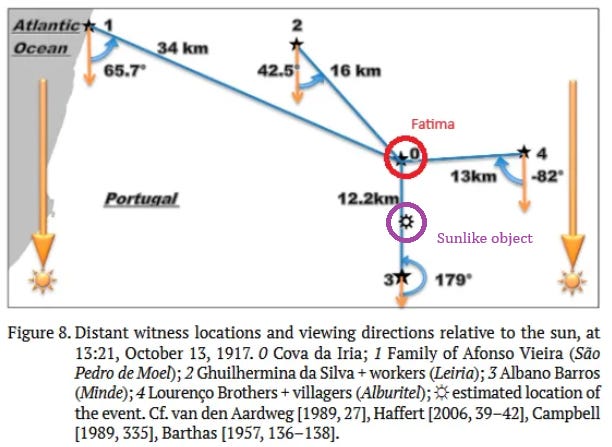
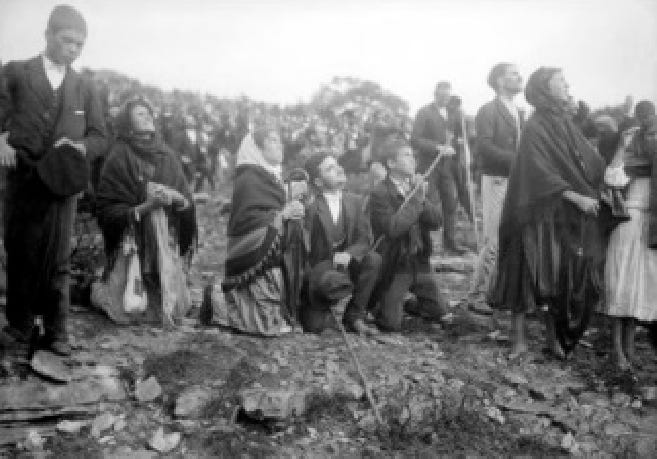
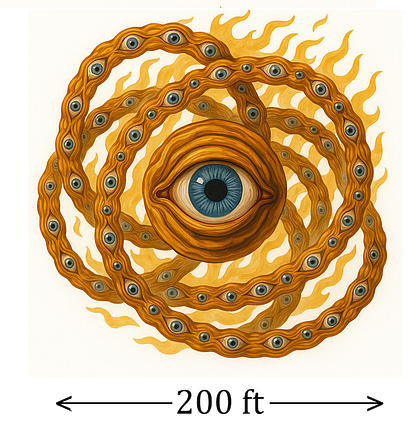
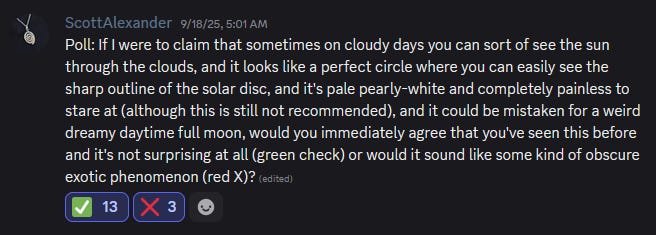
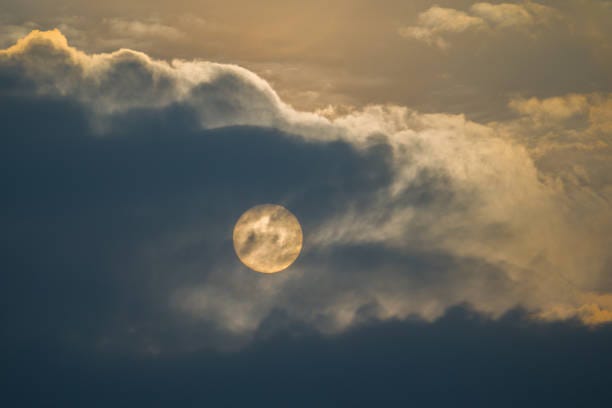
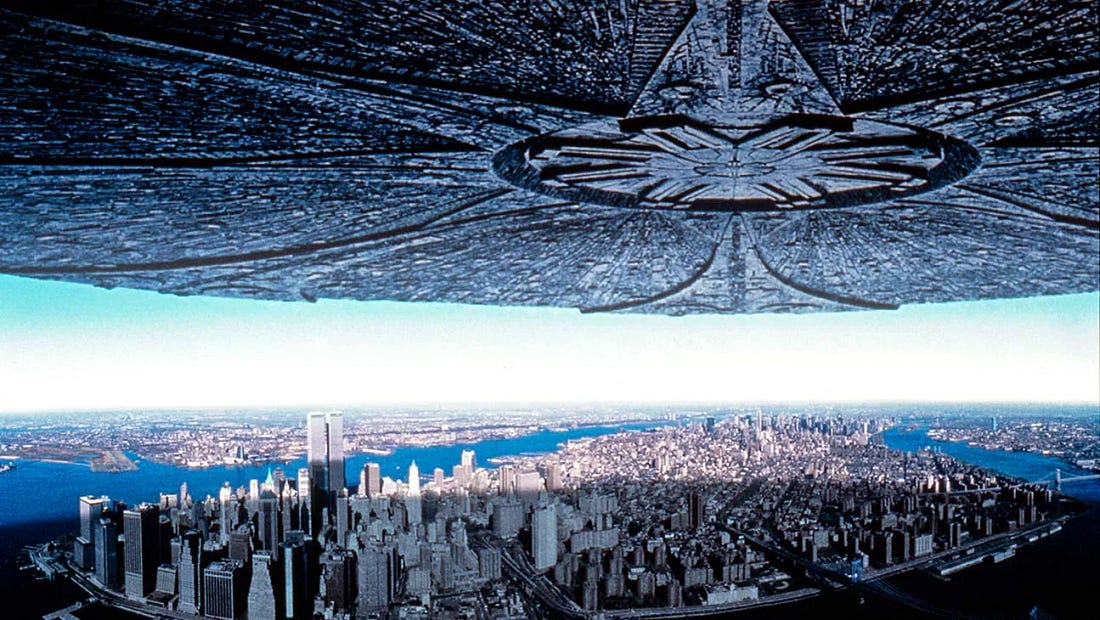


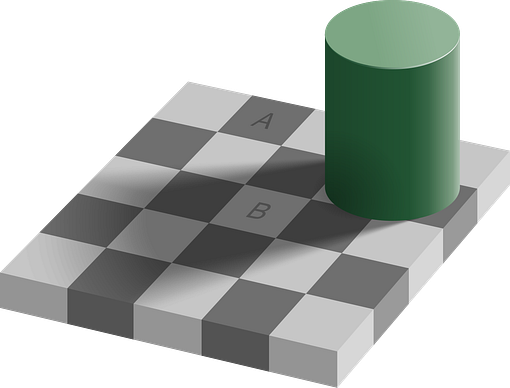

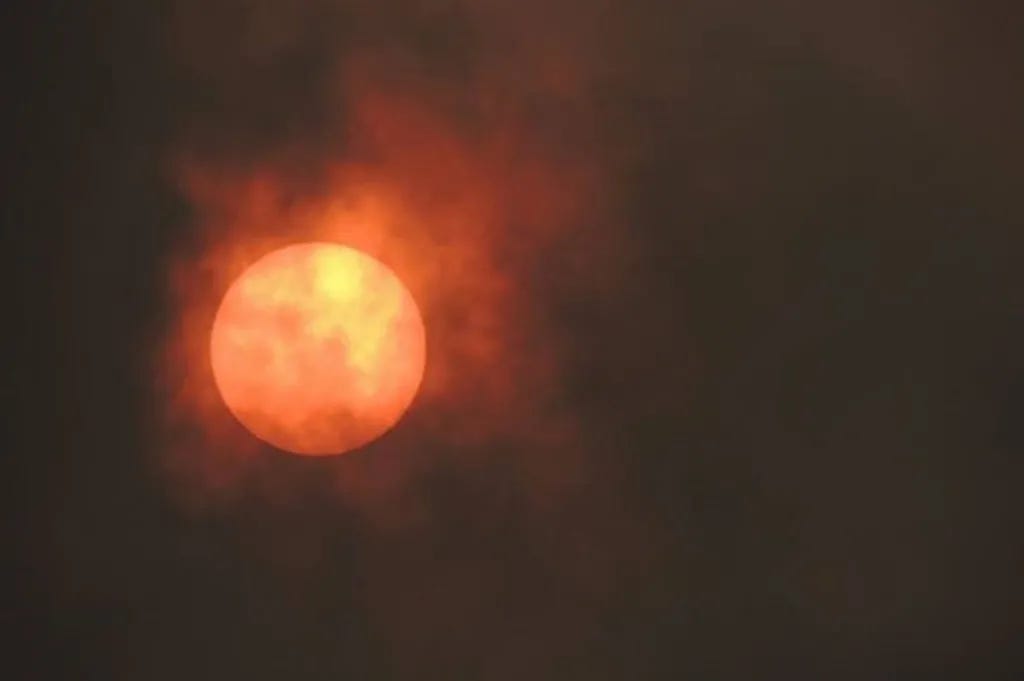
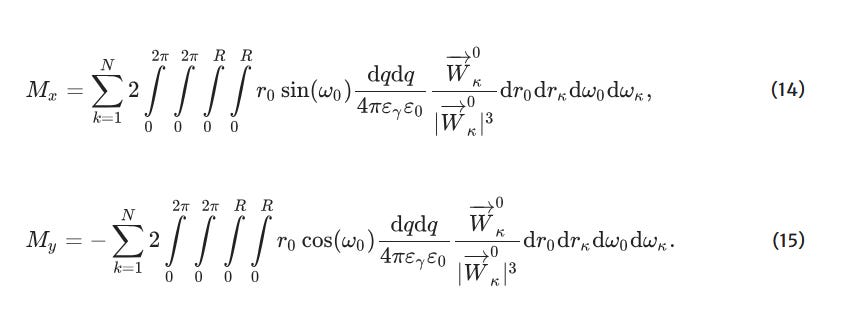
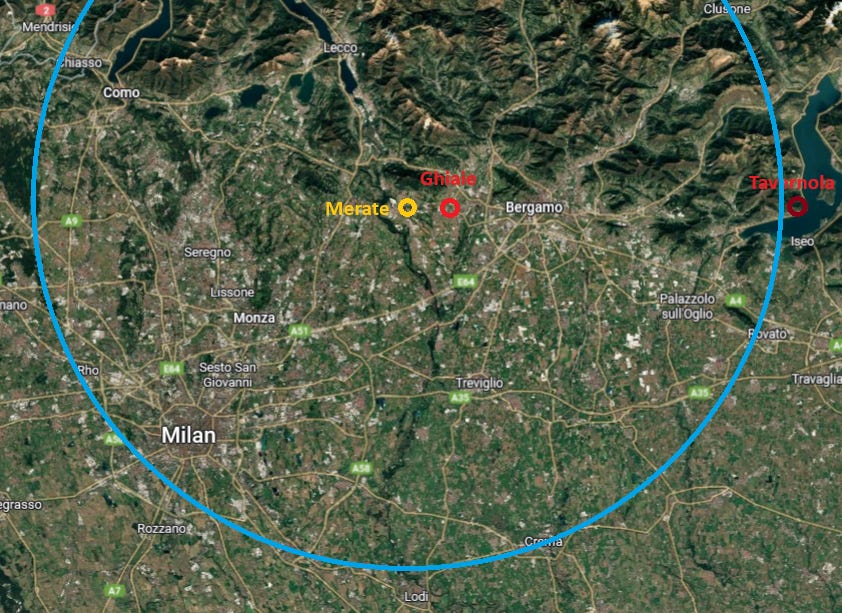

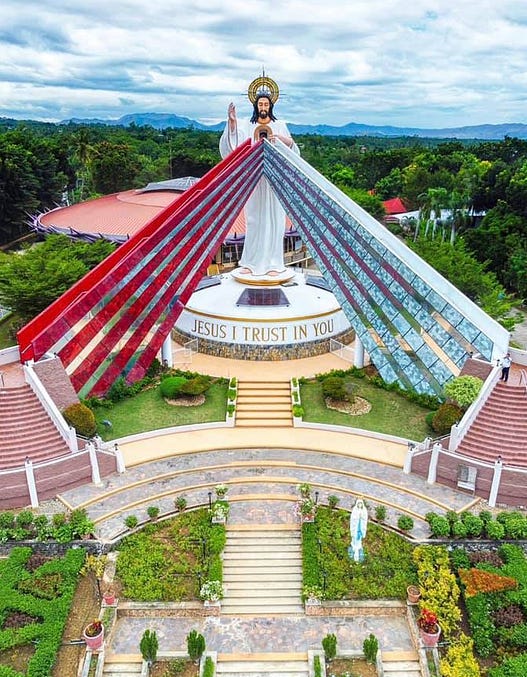
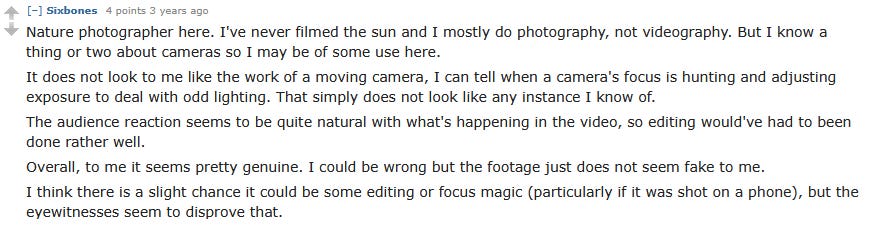
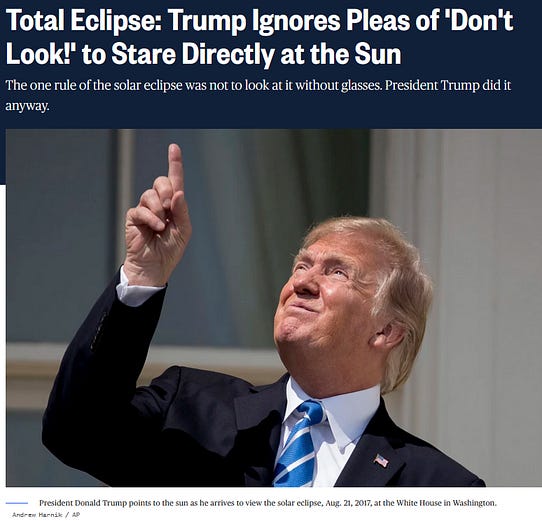

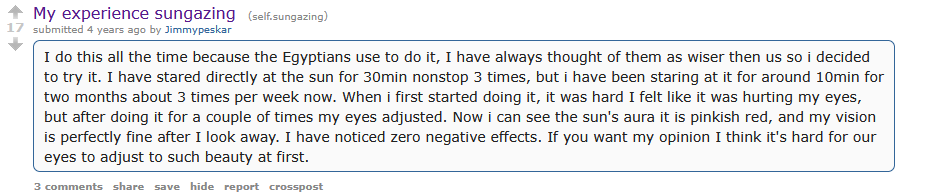
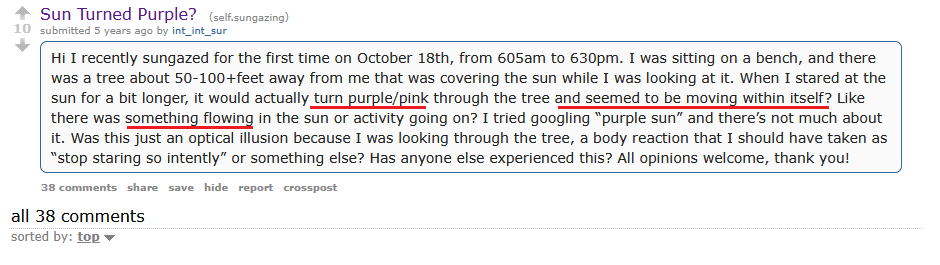



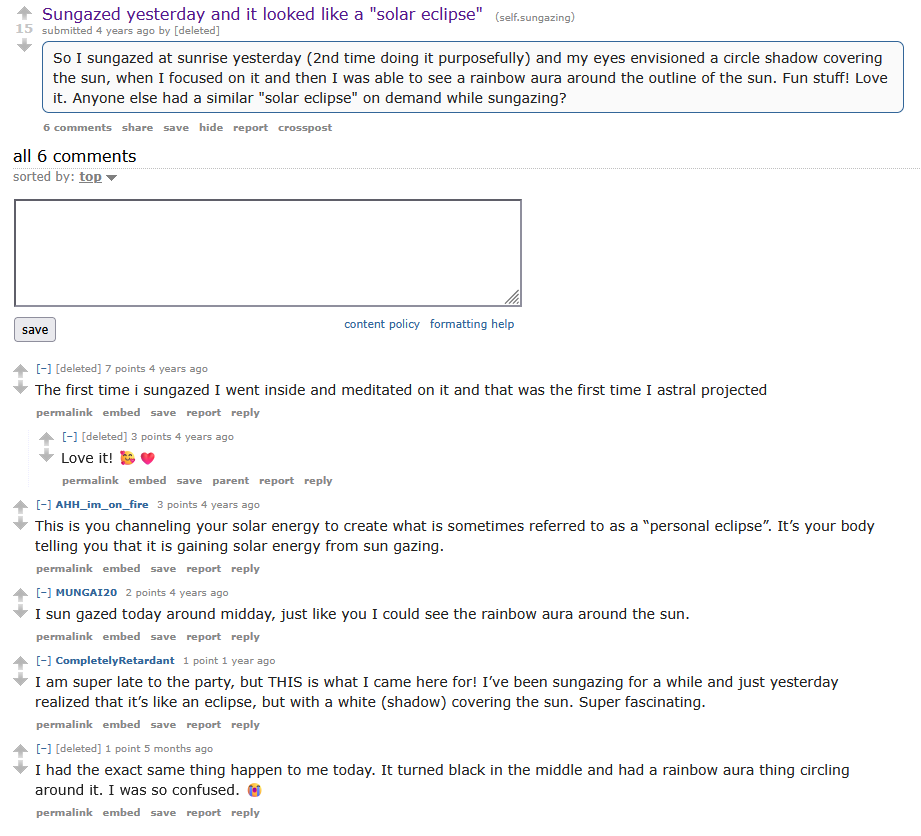
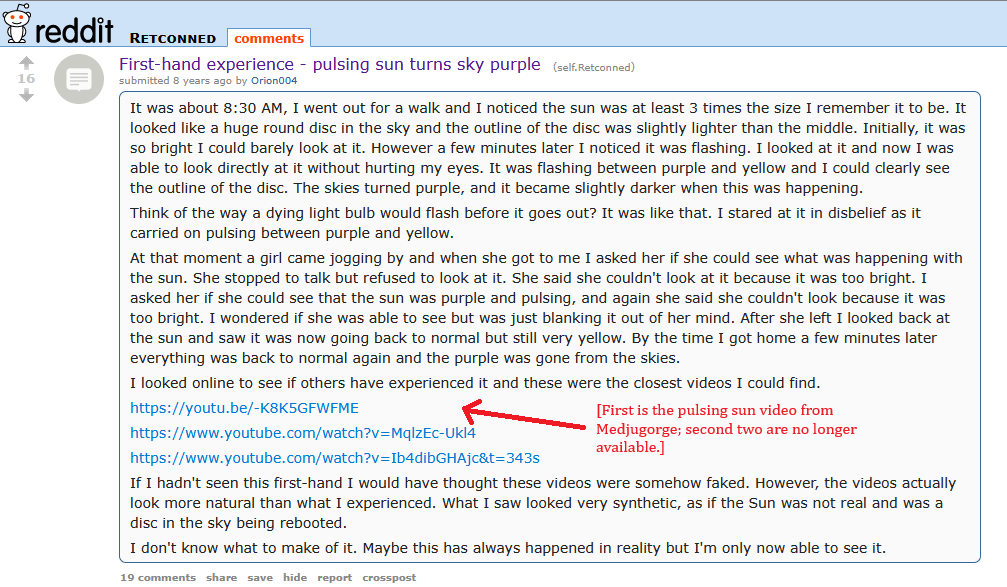








Views